
Tower Fan vs. Pedestal Fan: Which Cools a Bedroom Better?
This post may contain affiliate links, which means I may earn a small commission if you make a purchase through these links — at no extra cost to you. Thank you for supporting the content I create here on the blog! You can read my full Disclosure Policy for more details.
If you have ever woken up at 3:00 AM drenched in sweat, furiously kicking off the duvet and desperately searching for a dry, cool patch on your mattress, you are far from alone. In my early 40s and navigating the unpredictable waters of premenopause, “sleeping hot” is no longer an occasional mid-summer annoyance—it is an official nightly event.
My husband, Barry, and I spent ten years living in London in a classic top-floor Victorian flat. Like 95% of homes in the UK, we had zero air conditioning. When summer heatwaves hit, Barry—bless his stoic British heart—would happily sleep buried under a heavy blanket while sipping warm tea, entirely unfazed. Meanwhile, I hovered over a loud, rattling 8-inch desk fan trying to catch a single stray molecule of moving air.
Fast forward to today: we now live in the US, and even with central AC blasting downstairs, those sudden 2 AM hormonal heat surges mean a high-performance bedroom fan isn’t a luxury—it is non-negotiable survival equipment for my sanity and sleep quality.
When you are trying to turn a stuffy bedroom into a cool sleep sanctuary, choosing between a tower fan vs pedestal fan (or high-powered standing air circulator) makes all the difference. In this long-form guide, we break down every mechanical, acoustic, and practical difference so you can find the best fan for a hot bedroom, night sweats, and your budget.
The Short Answer: Choose a tower fan if you want a sleek, space-saving footprint, broad head-to-toe airflow, quiet white noise, and overnight sleep features like auto-dimming LEDs, sleep timers, and remote controls. Choose a pedestal fan or heavy-duty air circulator if you prioritize maximum raw wind velocity, adjustable height to blow over tall bed frames, and immediate whole-room air turnover.
Tower Fan vs. Pedestal Fan Comparison Table
| Feature | Tower Fan | Pedestal Fan / Air Circulator |
| Airflow Style | Broad, gentle vertical column | Strong, direct, long-throw stream |
| Floor Space | Narrow footprint (under 12″ base) | Wider circular base (16″–20″ wide) |
| Height Adjustment | Fixed column height | Usually height-adjustable |
| Vertical Tilt | Fixed vertical angle | Usually offers manual tilt control |
| Oscillation | Broad sweeping internal angle | Broad sweeping horizontal angle |
| Remote & Timers | Standard on almost all models | Model dependent |
| Noise Profile | Smooth, continuous white noise | Gentle hum on low; wind chop on high |
| Cleaning | Moderate (vacuuming vents) | Easy (front grille clips off) |
| Bedroom Appearance | Sleek, modern column | Utility / industrial appearance |
| Best For | Everyday bedroom sleep & night sweats | Very hot or large bedrooms |
| Price Tier | Moderate to Premium | Budget to Moderate |
The Core Difference: Tower Fan vs. Standing Fan
In simple terms: A tower fan spreads air through a tall, narrow vertical outlet using an internal cylindrical blower wheel, while a pedestal fan (standing fan) uses exposed axial blades mounted on a telescoping pole to produce a focused, high-velocity wind beam.
Do Tower Fans Cool a Room? (The Science of Airflow)
To choose the right design, it helps to understand what airflow actually accomplishes inside a warm bedroom. Do tower fans cool a room? The short answer is no—no fan physically lowers ambient room temperature like an air conditioner.
- What a fan DOES: Circulates stagnant air, accelerates sweat evaporation off your skin, breaks up heat pockets trapped around your mattress and duvet, and distributes air-conditioned air from open doorways or floor vents.
- What a fan DOES NOT do: Lower the physical room temperature or remove humidity from the air.
Quick Decision Guide:
- Which fan is better for cooling a room with raw wind power? Pedestal Fan / Air Circulator
- Which is the best fan for sleeping overnight? Tower Fan
- Which fan works best in small bedrooms? Tower Fan
- Are pedestal fans better than tower fans? Only if you require intense wind velocity, directional tilt, and height adjustability to reach over high footboards. For quiet, comfortable bedroom sleep, tower fans are usually superior.
Deep Dive: Airflow Dynamics & Bedroom Positioning
Understanding how these two styles propel air across a bedroom explains why they feel fundamentally different when you are lying under a top sheet.
Tower Fans: The Gentle Blanket of Breeze
Tower fans feature an internal squirrel-cage blower wheel. Air is drawn into the rear of the unit and forced out through a tall front vent.
- The Sensation: Instead of a harsh beam of wind blasting your face, you experience a tall, uniform sheet of moving air.
- Coverage: It cools your shoulders, hips, and feet simultaneously when lying flat on your mattress.
- Limitation: Because air is distributed along a 30-to-40-inch vertical slot, the air velocity feels softer if the fan is placed far away (8+ feet) across a large bedroom.
Pedestal Fans: Focused High-Velocity Wind
Pedestal fans utilize traditional propeller-style blades that chop through air and propel it forward in a high-velocity cone.
- The Sensation: High-impact wind that pierces through heavy cotton sheets and duvet covers to deliver immediate cooling.
- Adjustability: Pedestal fans offer height adjustment (raising the fan head above high mattress tops or wooden footboards) and vertical tilt (aiming wind directly at your torso or up toward the ceiling).
- Limitation: The direct wind stream can feel overly aggressive or dry out your eyes and throat if pointed directly at your face all night.
Acoustic & Operational Performance
Tower Fan vs. Pedestal Fan Noise
When evaluating tower fan vs pedestal fan noise, tower fans are widely considered the acoustic winner for hot sleepers. They generate a smooth, continuous airflow sound that doubles as high-quality white noise to mask street traffic or a snoring partner. Pedestal fans run very quietly on their lowest speeds, but pushing them to medium or high settings creates a rhythmic wind-chop sound as the blades slice through the air.
Tower Fan vs. Pedestal Fan Electricity Use
When analyzing tower fan vs pedestal fan electricity use, both options are remarkably energy-efficient. Standard models draw between 25 and 60 watts on typical settings—costing just pennies per night to run compared to the substantial cost of running whole-house central air conditioning.
Nighttime Convenience & Light Pollution
If you wake up sweating in the middle of the night, convenience is paramount:
- Display Light Shutoff: Premium tower fans feature auto-dimming control screens or dedicated display-off buttons so your bedroom stays pitch black.
- Sleep Timers: Built-in 1-to-8-hour auto-shutoff timers prevent you from waking up shivering at 4:00 AM when ambient temperatures drop.
- Remote Control: Adjusting wind speed from your pillow without sitting up is essential during sudden hot flashes.
Practical Realities: Floor Space, Cleaning & Safety
Footprint & Bedroom Styling
- Tower Fans: Occupy less than one square foot of floor space. Their slender vertical profile slides seamlessly between a nightstand and a wall or tucks into a tight bedroom corner.
- Pedestal Fans: Require a broad circular base (16 to 20 inches wide) to maintain balance and prevent tipping. They demand significant floor space and can dominate a bedroom visually with a utility aesthetic.
Cleaning & Maintenance
Dust accumulation reduces cooling performance, increases motor strain, and blows allergens directly onto your sheets.
- Pedestal Fans: Exceptionally easy to clean. Unclip the front wire cage, wipe down the blades with a damp cloth, and snap the grille back on in under five minutes.
- Tower Fans: Historically harder to deep clean due to internal cylindrical blades. However, modern designs (including our personal favorite below) now feature removable intake panels for easy vacuuming and maintenance.
Safety Around Pets & Children
- Tower Fans: Feature tight exterior grilles that prevent small fingers or pet paws from reaching internal moving parts.
- Pedestal Fans: Elevate moving blades higher off the floor, but their higher center of gravity means lightweight budget models can tip over if bumped by pets or children.
Product Roundup: Best Bedroom Fans for Hot Sleepers
1. Dyson Purifier Cool TP07
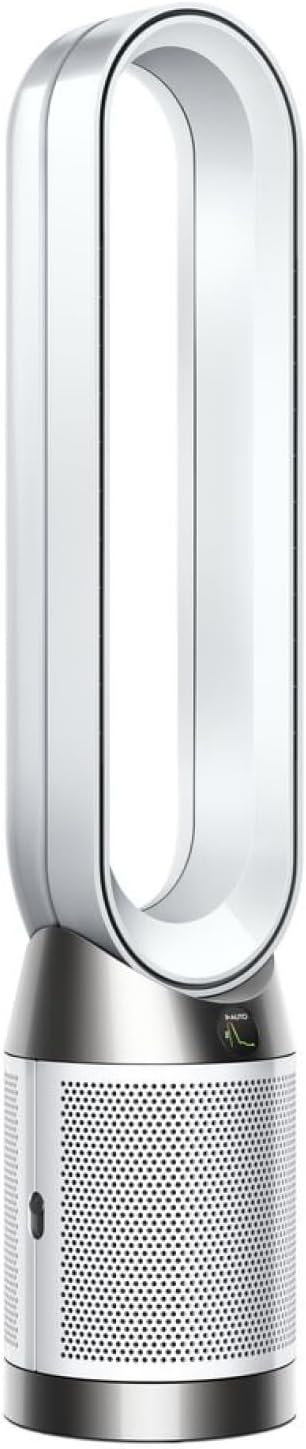
- Cools your bedroom while capturing pollen, dust, pet dander, and other airborne irritants.
- App, voice, and remote controls let you adjust the airflow without emerging from the duvet.
- Its bladeless design, 350° oscillation, and smart scheduling make bedtime cooling feel completely effortless.
This is an affiliate link. As an Amazon Associate, I earn from qualifying purchases.
If you consider your bedroom a sanctuary and want the absolute pinnacle of sleek, modern air technology, the Dyson Purifier Cool TP07 is in a class by itself. Dyson engineered this unit to solve two bedroom problems at once: oppressive airflow stagnation and nighttime airborne allergens. It looks like a piece of modern art rather than a home appliance, making it a dream for aesthetics-focused bedrooms.
Key Specifications
- Fan Type: Smart Bladeless Air Purifier & Tower Fan
- Oscillation Angle: Up to 350° broad coverage
- Control Options: Remote control, Dyson Link App, Voice Control (Alexa/Google)
- Filtration: Fully sealed True HEPA H13 + Activated Carbon filter
Performance Breakdown
Using Dyson’s patented Air Multiplier technology, the TP07 draws in surrounding air and amplifies it into an uninterrupted stream of purified wind. It operates up to 20% quieter than previous models, making it ideal for light sleepers. In Night Mode, the machine monitors air quality and runs on its whisper-quiet settings while completely dimming the central LCD display.
- Buy This If: You want a luxury, ultra-quiet fan that purifies bedroom air while providing sleek, bladeless cooling.
- Main Advantage: Combined HEPA air purification with whisper-quiet, bladeless breeze.
- Main Disadvantage: High initial price tier.
2. Rowenta Turbo Silence Extreme+ Pedestal Fan
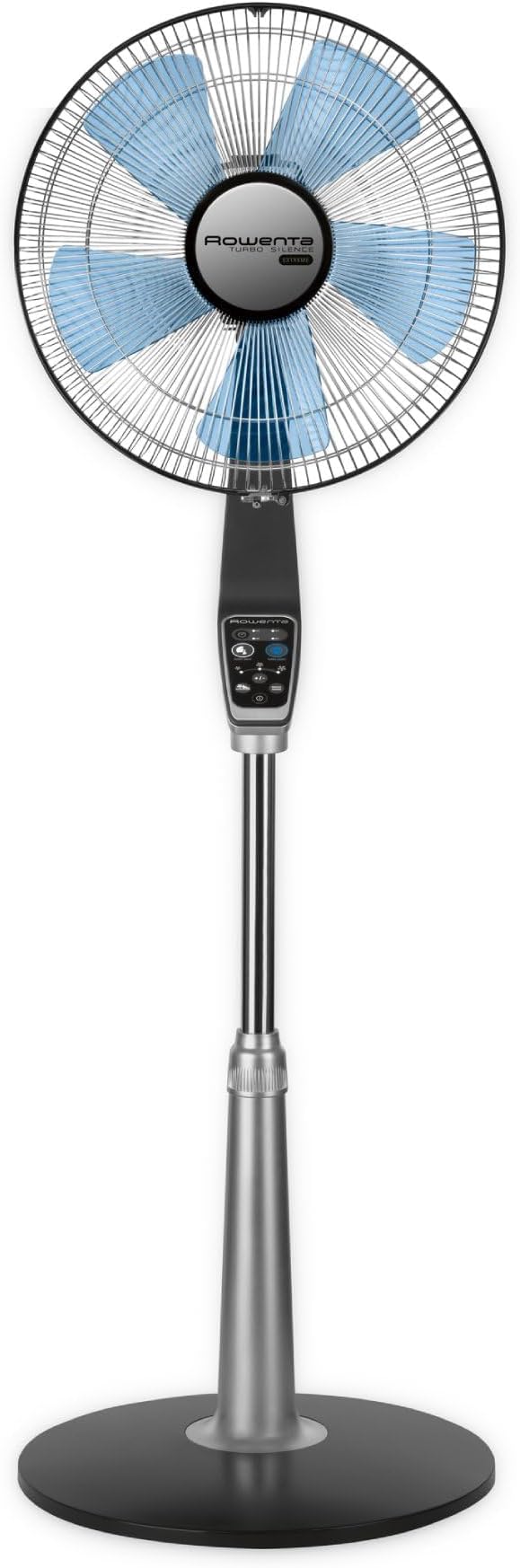
- Pushes an impressive amount of air while staying whisper-quiet at night.
- Adjusts high enough to clear tall mattresses, footboards, and elevated bed frames.
- Feels sturdy, powerful, and far more premium than a typical pedestal fan.
This is an affiliate link. As an Amazon Associate, I earn from qualifying purchases.
If you want the raw airflow power and height adjustability of a traditional standing fan without the deafening motor roar, the Rowenta Turbo Silence Extreme+ is the premier choice. Rowenta specifically solved the noisy blade problem by engineering aerodynamic propeller blades that operate at an incredible whisper-quiet 35 dB on its lowest mode—making it the gold standard for pedestal bedroom cooling.
Key Specifications
- Fan Type: Height-Adjustable Standing Pedestal Fan
- Noise Level: As low as 35 dB (Silent Night Mode)
- Adjustability: Telescoping pole adjusts from 45 to 54 inches; 5 speed settings
- Airflow Output: Up to 2,436 CFM (Cubic Feet per Minute)
Performance Breakdown
Unlike budget standing fans that rattle, wobble, and roar on high, the Rowenta features a heavy, rock-solid base and custom 5-blade propulsion. Its “Silent Night” mode pushes a substantial volume of air across your bed while remaining virtually silent. Because you can elevate the fan head up to 54 inches and tilt it downward, wind passes directly over high footboards and pillow-top mattresses to cool you immediately.
- Buy This If: You have a tall bed frame or footboard and need serious wind power combined with whisper-quiet nighttime performance.
- Main Advantage: Unmatched combination of high airflow volume (CFM) and whisper-quiet noise levels.
- Main Disadvantage: Wider circular base occupies more floor space than a tower fan.
3. Vornado 660 Large Air Circulator
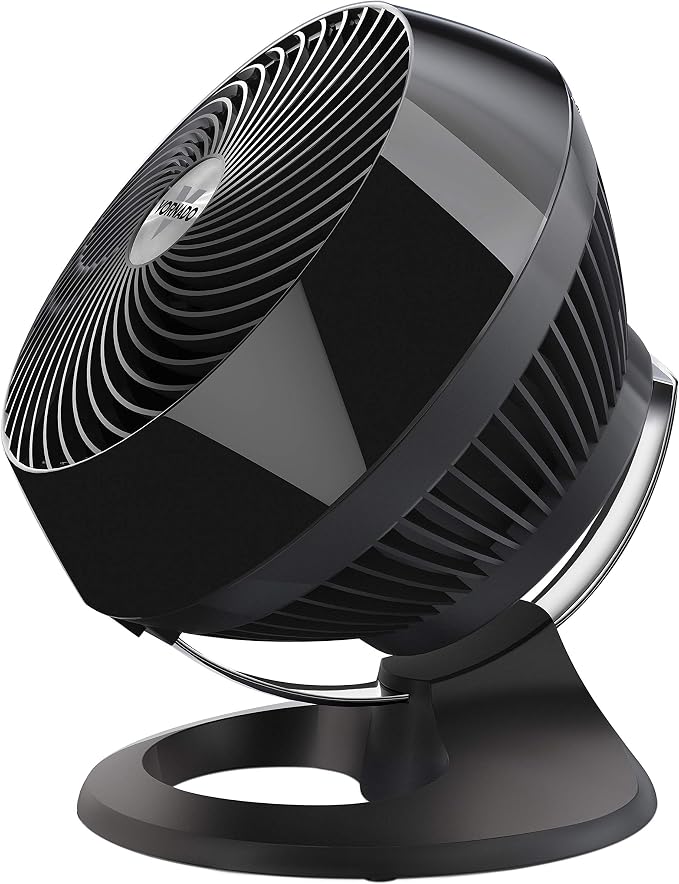
- Creates continuous whole-room airflow, so the breeze never swings away mid–hot flash.
- Powerful vortex circulation tackles muggy, stagnant bedrooms where ordinary fans surrender.
- No squeaky oscillation gears—just relentless, smooth air movement all night long.
This is an affiliate link. As an Amazon Associate, I earn from qualifying purchases.
While technically classified as a heavy-duty air circulator rather than a traditional tall pole fan, the Vornado 660 is an absolute powerhouse that puts traditional standing fans to shame. Vornado pioneered whole-room air movement, and the 660 model is designed specifically for rooms where air turns heavy, humid, and stagnant during hot summer nights.
Key Specifications
- Fan Type: High-Velocity Whole-Room Air Circulator
- Air Throw Distance: Drives air up to 100 feet
- Speed Settings: 4 push-button speed controls
- Tilt Mechanism: Chrome glide bar allowing a full 90° vertical tilt range
Performance Breakdown
Unlike traditional fans that simply blow a narrow breeze directly at your face, the Vornado 660 uses deep-pitch blades and an enclosed spiral grille to create a vortex air beam. This beam bounces off walls and ceilings to keep every cubic foot of air in your bedroom in continuous motion, completely eliminating humid heat pockets around your mattress.
- Buy This If: You have a large master bedroom or an upper-floor room that traps intense, humid heat.
- Main Advantage: Unrivaled raw air volume turnover and long-term motor durability.
- Main Disadvantage: Lacks horizontal oscillation and a remote control.
4. Lasko 42-Inch Wind Curve
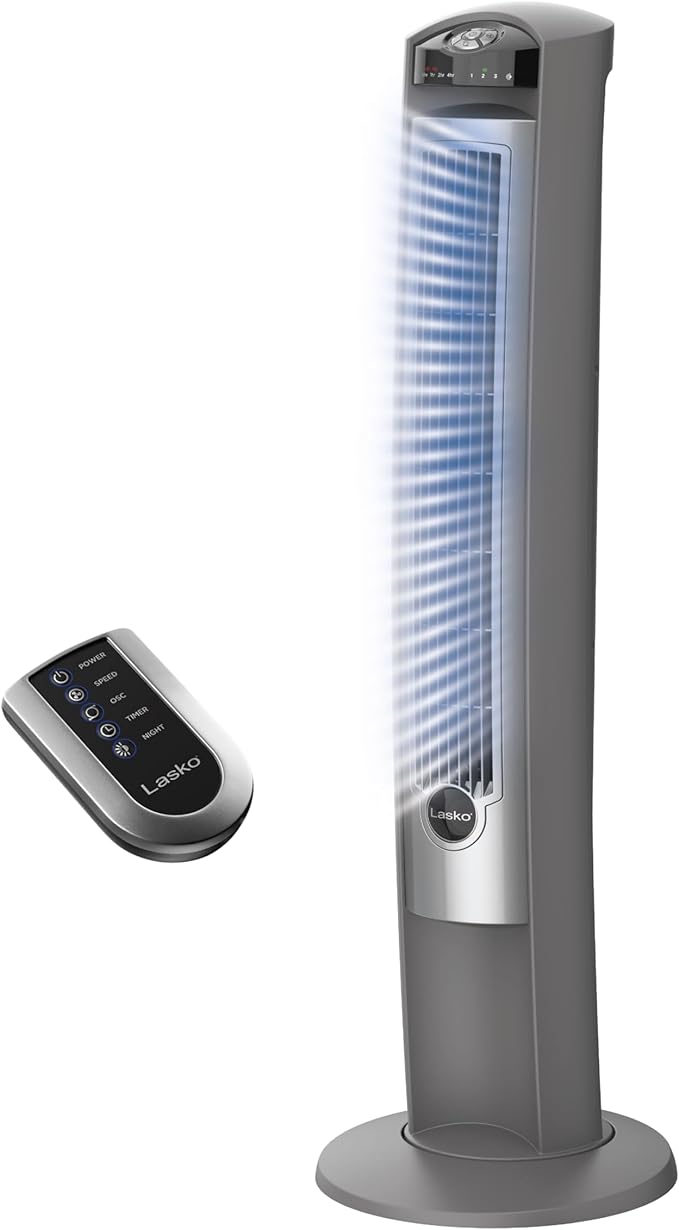
- Its extra-tall design actually sends air over thick mattresses instead of into the bed frame.
- Night Mode dims the controls and gradually lowers the speed while you sleep.
- Sleek woodgrain detailing looks far more polished than your average plastic tower fan.
This is an affiliate link. As an Amazon Associate, I earn from qualifying purchases.
Lasko has been manufacturing reliable home fans for over a century, and the 42-Inch Wind Curve remains one of the most widely trusted bedroom tower fans in America. Its elevated 42-inch profile and classic wood-grain accent trim make it an attractive, functional addition to traditional master bedrooms.
Key Specifications
- Height: 42 inches tall
- Speed Settings: 3 quiet speeds
- Timer: Integrated auto-shutoff timer (0.5 to 7.5 hours)
- Safety Feature: Patented Blue Plug safety fuse technology
Performance Breakdown
The primary challenge with standard 30-inch tower fans is that their air outlet sits too low if you sleep on a thick mattress, pillow-top topper, or elevated bed frame. The Lasko Wind Curve solves this entirely: its high vertical outlet clears mattress edges and footboards easily. It also features a built-in Night-Time setting that automatically dims control lights and steps down fan speed over time.
- Buy This If: You have a tall bed frame or thick pillow-top mattress that blocks shorter tower fans.
- Main Advantage: High vertical vent clears tall bed frames effortlessly; reliable mid-range performance.
- Main Disadvantage: Plastic base requires careful assembly during initial setup.
5. Dreo Nomad One Tower Fan (PERSONAL FAVORITE)
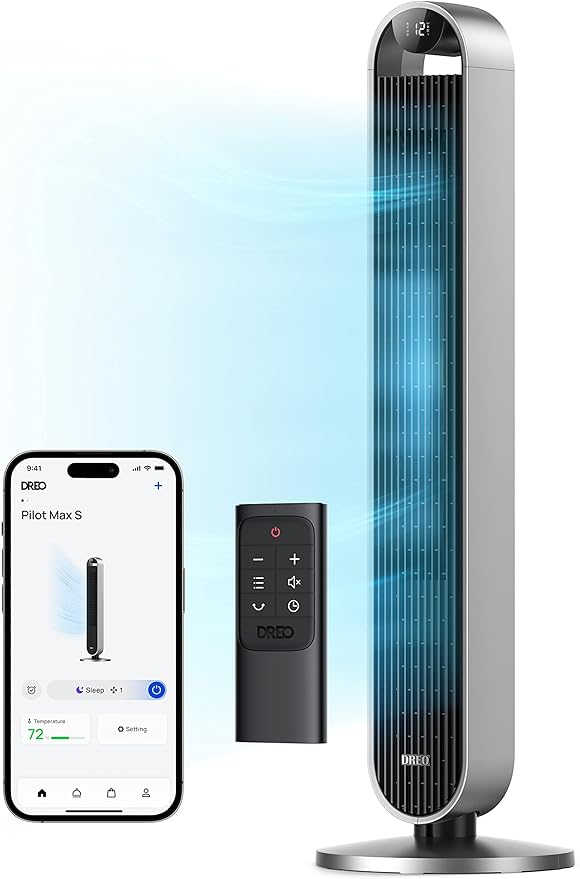
- Whisper-quiet airflow means no rattling, roaring, or tiny jet engine beside your bed.
- Sleep Mode shuts off every light and beep for a genuinely pitch-black bedroom.
- Powerful 90° oscillation cools the room without hogging precious floor space.
This is an affiliate link. As an Amazon Associate, I earn from qualifying purchases.
Having survived ten AC-less London summers relying on drafty sash windows and noisy, inefficient desk fans with Barry, finding the Dreo Nomad One after moving back to the US felt like an absolute miracle. This compact tower fan punches far above its weight class, delivering ultra-quiet performance and smart features specifically tailored for hot sleepers.
Key Specifications
- Height: 36-inch compact column
- Air Velocity: High-speed airflow up to 24 ft/s
- Modes: 4 distinct modes (Normal, Natural, Sleep, Auto)
- Maintenance: Removable rear grille and impeller wheel for quick cleaning
Performance Breakdown
Dreo addressed the single biggest flaw of tower fans: difficult cleaning. The Nomad One features a snap-off rear panel and removable internal wheel, allowing you to wash away dust in under two minutes. Its Sleep Mode is blissfully smooth, and the LED screen turns off completely after 30 seconds so your bedroom remains pitch black while you sleep through hormonal heat flashes.
- Buy This If: You want the absolute best overall bedroom fan for night sweats with easy cleaning and whisper-quiet sleep modes.
- Main Advantage: Removable easy-clean design, auto-dimming screen, and whisper-quiet operation.
- Main Disadvantage: 36-inch height means it performs best when placed within 4 to 6 feet of the bed.
Scenario Guide: Which Fan Fits Your Bedroom?
Scenario 1: Small Bedrooms or Tight Layouts
- Clear Winner: Tower Fan (e.g., Dreo Nomad One)
- Why: In smaller bedrooms where floor space between the mattress, nightstand, and wardrobe is limited, a tower fan’s sub-12-inch footprint slides into tight corners without creating a tripping hazard in the dark.
Scenario 2: Large Master Bedrooms or Tall Bed Frames
- Clear Winner: Pedestal Fan or Whole-Room Air Circulator (e.g., Vornado 660 / Rowenta Extreme+)
- Why: Sprawling master bedrooms require high CFM (cubic feet per minute) air turnover to break up humidity. Furthermore, if you sleep on a high pillow-top mattress with a wooden footboard, an elevated or height-adjustable fan ensures airflow isn’t blocked by furniture.
Scenario 3: Tower Fan or Pedestal Fan for Night Sweats
- Clear Winner: Tower Fan with Remote Control & Dimmable LED (e.g., Dyson Purifier Cool TP07)
- Why: When a sudden thermal spike wakes you up at 2:00 AM, getting out of bed to turn on a fan ruins your chances of falling back to sleep. A tower fan blowing a broad, head-to-toe sheet of breeze quickly evaporates sweat off your skin while keeping the room dark and quiet. (You might also like my full guide: How to Reduce Menopause Night Sweats and Sleep Cooler)
Scenario 4: When One Partner Sleeps Hot & The Other Sleeps Cold
- Clear Winner: Stationary Positioned Tower Fan or Directional Pedestal Fan
- Why: Wide 350° room oscillation can cause nighttime tug-of-war battles over the covers! Turn off oscillation and angle a tower fan (like the Dreo Nomad One) or directional pedestal fan (like the Rowenta) strictly toward your side of the mattress. This creates a personal cooling zone while allowing your partner (hi, Barry!) to stay cozy under their duvet.
Fan vs. Active Bed-Cooling System
- Choose a Bedroom Fan when: You want an affordable solution (under $300), gentle breeze across exposed skin, soothing acoustic white noise, and a straightforward setup.
- Choose an Active Bed-Cooling System when: Your mattress itself absorbs body heat like a sponge, passive cooling bedding has failed, and you require active liquid or air temperature regulation underneath your fitted sheet. (Check out my full guide: Best Bed-Cooling Systems for Hot Sleepers!)
How to Place Your Fan for Maximum Nighttime Cooling
Proper positioning can turn a standard home fan into a remarkably effective cooling engine:
Tower Fan Placement Rules:
- Optimal Distance: Position the fan 3 to 5 feet from the side of your mattress.
- Sweep Angle: Align the oscillation path so the breeze sweeps horizontally across your chest, hips, and legs.
- Vent Clearance: Keep the rear intake vents at least 6 inches away from drapes, bed skirts, or walls so the motor pulls fresh air freely.
Pedestal Fan / Circulator Placement Rules:
- Cross-Breeze Setup: Place the fan near an open bedroom door or cooler hallway entrance to draw lower-temperature air across your bed.
- Height Alignment: Adjust the center pole so the middle of the fan head sits 4 to 6 inches higher than the top of your mattress.
- Downward Skim: Tilt the fan head slightly downward so the wind beam skims across your top sheet rather than blowing directly into your face.
FAQs
Is a tower fan or pedestal fan better for a bedroom?
A tower fan is better for most standard bedrooms because it offers a compact footprint, quiet low settings, pleasant white noise, and overnight features like sleep timers, remote controls, and auto-dimming displays.
Do tower fans actually cool a room?
No fan physically lowers ambient room temperature like an air conditioner. However, tower fans create a wind-chill effect across your skin that speeds up sweat evaporation, making you feel 4 to 7 degrees cooler.
Are tower fans quieter than pedestal fans?
Yes. Tower fans utilize internal blower wheels that generate a smooth, continuous white noise hum. Pedestal fans run quietly on low speeds, but their exposed blades can produce noticeable wind chop at medium and high speeds.
Which is the best bedroom fan for hot sleepers with night sweats?
A tower fan with a remote control (such as the Dreo Nomad One) is the best bedroom fan for hot sleepers because it delivers broad vertical air coverage across your entire body and lets you adjust speeds from your pillow without getting up.
Can I leave a tower or pedestal fan running all night?
Yes. Quality modern fans equipped with fuse-protected safety plugs are engineered specifically for safe, continuous overnight operation.
Final Verdict
- Choose a Tower Fan if: You want a quiet, compact fan with sleep timers, auto-dimming screens, and gentle head-to-toe airflow across your bed. (Our top pick: Dreo Nomad One for value and easy cleaning, or Dyson TP07 for luxury air purification).
- Choose a Pedestal Fan / Circulator if: You need maximum wind velocity, adjustable height to clear tall bed frames, and easy blade cleaning to manage severe room heat. (My top pick: Rowenta).