
How to Arrange Tulips in a Vase (Elevate Your Home for Spring)
This post may contain affiliate links, which means I may earn a small commission if you make a purchase through these links — at no extra cost to you. Thank you for supporting the content I create here on the blog! You can read my full Disclosure Policy for more details.
In this article
It’s Wednesday morning and you realize the grocery store tulips you bought on a whim have started to do The Thing—where they stop standing up straight like polite little soldiers and start archingly their necks with the dramatic flair of a Victorian heroine swooning onto a velvet chaise. It is peak main character energy for a flower.
If you’ve been looking for tulip arrangement ideas that feel less like a supermarket bouquet and more like a deliberate, slow-living moment, you aren’t alone. We all want that effortless, “I just threw these together in my favorite vintage pitcher” look, but usually, we end up with a clump of stems that looks like it’s trying to escape the vase. The secret isn’t just in the flowers themselves; it’s in understanding that tulips are essentially the moody artists of the floral world. They keep growing after they’re cut, they turn toward the light like they’re searching for a lost lover, and they require a very specific kind of hands-off curation to look their best.
Quick Answer: The Most Elegant Tulip Arrangement Ideas
To create a professional-looking tulip arrangement at home, you need to lean into the flower’s natural movement rather than fighting it. Whether you prefer a minimalist single-variety look or a lush, mixed-spring bouquet, the key is proper stem preparation and vessel selection.
The best tulip arrangement ideas for a refined home aesthetic include:
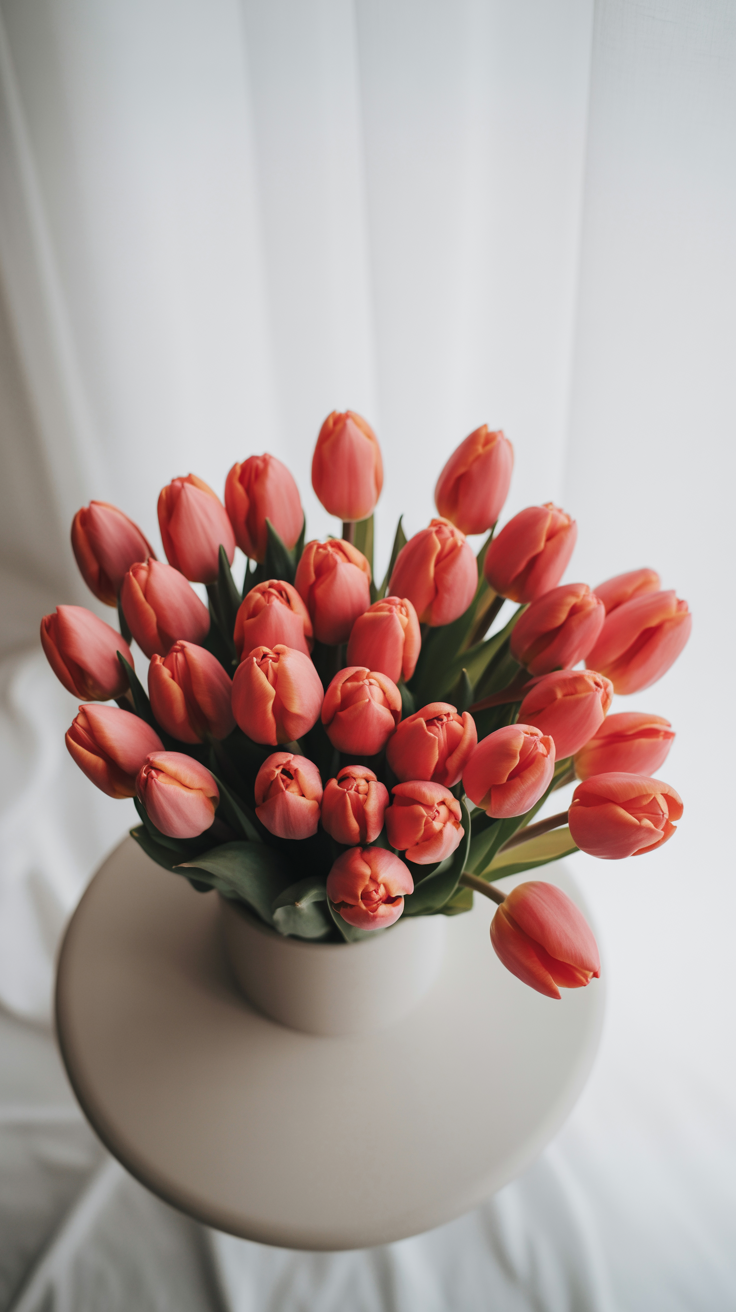
- The Monochromatic Mass: 20–30 stems of the same color in a wide-mouth opaque vase.
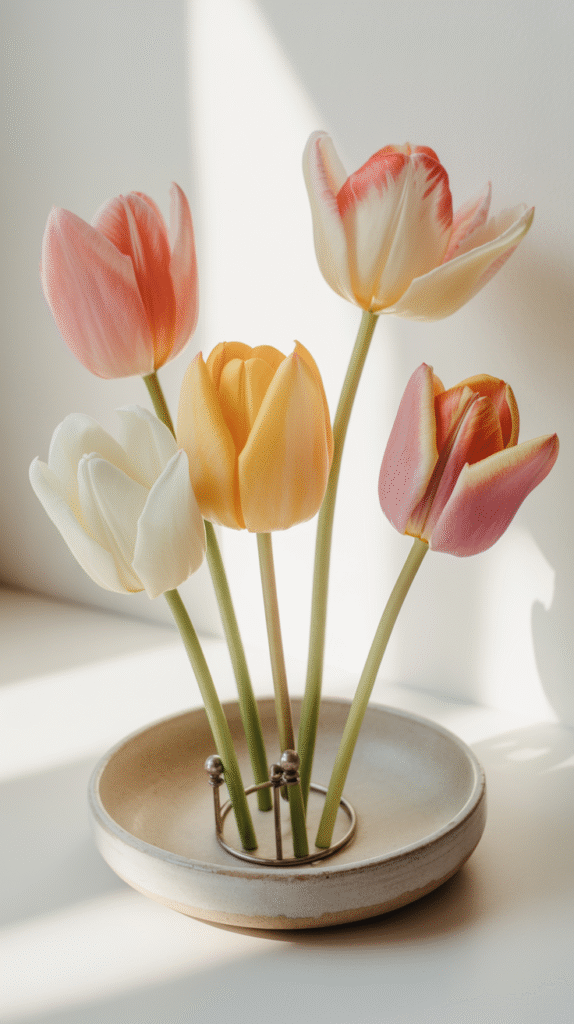
- The Ikebana-Inspired Minimalist: Three to five stems at varying heights in a shallow pin frog bowl.
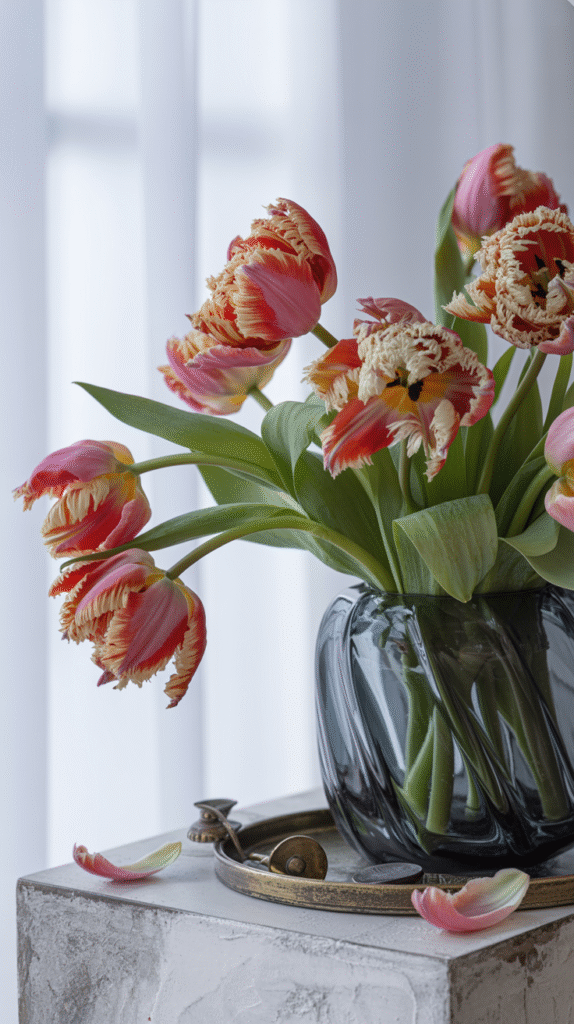
- The Parrot Tulip Statement: Using textured, ruffled varieties as a standalone centerpiece.
- The Mixed Herb Garden Look: Pairing tulips with fragrant mint, basil, or eucalyptus.
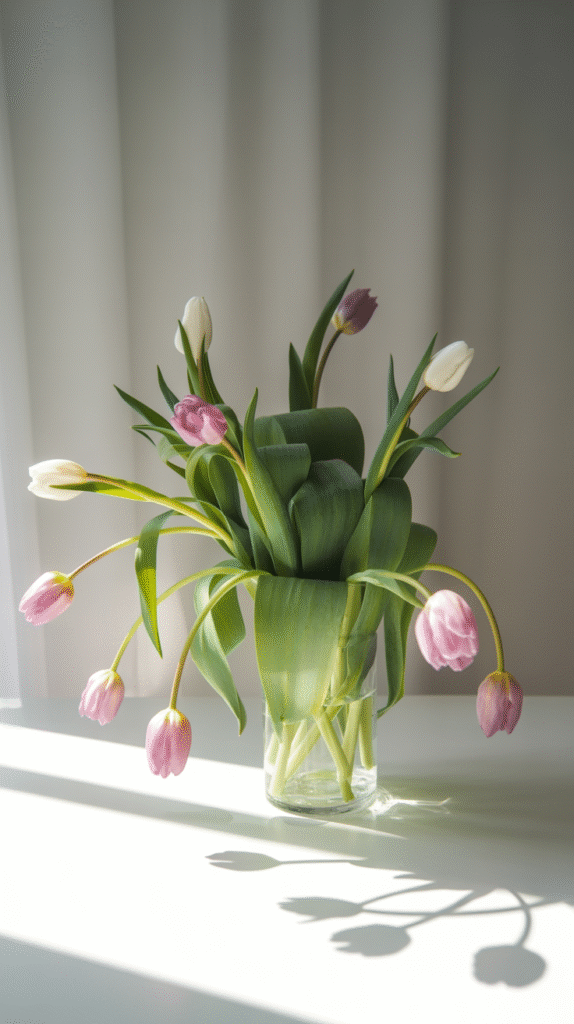
- The “Leaning” Dutch Master Style: Allowing stems to naturally drape over the edge of a tall, thin vessel.
- The Forced Bulb Display: Keeping the bulbs attached and nesting them in moss and shallow water.
Do Tulips Keep Growing in the Vase?
You buy a beautiful bunch of French tulips, you trim them, you put them in a vase, and by Monday morning, they are staring at the floor like they’ve just received terrible news. (Honestly, same, tulips. Same.)
But here’s the thing: they aren’t necessarily dying. Tulips are phototropic, meaning they move and grow toward light sources. They also contain a plant hormone called auxin, which causes the cells in the stems to elongate even after they’ve been cut from the bulb. While most flowers stay exactly where you put them, tulips are active participants in your home decor. They are going to move. They are going to stretch. And if you don’t give them the right support, they are going to flop.
The “droop” is actually part of their charm if you frame it correctly. In London, I used to walk past the flower stalls near Chelsea and see these incredible, massive displays where the tulips were almost touching the table surface, and it looked intentional and expensive. The trick is choosing a vase that is about half the height of the stems. This provides enough structure to keep them upright near the base while allowing the tops to do that gorgeous, architectural curve that defines the species.
How to Stop Tulips from Drooping
If you want your tulip arrangement ideas to actually last longer than a long weekend, you have to be a little bit ruthless with the prep. I used to be afraid of hurting the flowers—which is hilarious because they’re literally already cut—but now I know that a “tough love” approach is the only way to avoid the dreaded slimy-stem syndrome.
To keep your tulips upright and fresh, follow these steps:
- Remove excess foliage: Strip any leaves that will sit below the water line to prevent bacterial growth.
- The Pin Prick Method: Use a safety pin to poke a tiny hole through the stem just below the flower head to release trapped air.
- Use Cold Water: Tulips prefer very cold, clean water. (I’ve even been known to toss an ice cube or two in the vase when I’m feeling particularly extra.)
- The Fresh Cut: Cut the stems at a sharp 45-degree angle to maximize their drinking surface.
Some people swear by the “penny in the vase” trick, claiming the copper acts as a fungicide. While the jury is out on the science of the penny, the most important thing is simply cold water and a very clean vessel. (Trying to go vegan and emotionally attached to convenience foods is its own genre of character development, but I still make time to scrub my vases properly.)
The “Petal Reflexing” Hack for a Luxury Look
If you want to take a standard ten-stem bunch of grocery store tulips and make them look like a $150 designer arrangement, you need to learn how to reflex the petals. This is the ultimate “low effort glow-up” for your coffee table.
Gently take a tulip that has softened slightly (don’t do this with ice-cold, rigid stems or they will snap) and use your thumb to softly “flip” the outer petals backward. You are essentially turning the flower inside out. It transforms a tight, modest bud into a massive, ruffled bloom that looks more like a rare garden rose or a peony. It’s a total “lazy smart” move that makes your home feel like a curated set for a Nancy Meyers movie.
The Art of the Monochromatic Mass
There is something deeply satisfying about a huge bundle of tulips in a single, solid color. It feels very “quiet luxury”—like you have your life together enough to coordinate your florals with your interior palette. I’m currently going through a heavy “creamy white” phase, which probably says something about my desire for mental clarity, but a deep, moody purple (total Ghost/Papa V vibes) is also incredible for a more Victorian gothic aesthetic.
When doing a monochromatic arrangement, the goal is volume. You want enough stems that they support each other. If the vase is too wide and you only have ten stems, they’ll just fall to the sides and leave a big awkward gap in the middle. Think of it like a crowded elevator: everyone stays upright because there’s nowhere else to go.
I like to use an opaque ceramic vase for this. Why? Because tulip water gets cloudy FAST, and unless you want to change that water every single morning (I don’t; I have a cat to negotiate with and a Barry who needs his tea), an opaque vase hides the murky reality of the situation. It keeps the focus on the blooms, not the stems.
Mixing Tulips with Other Spring Textures
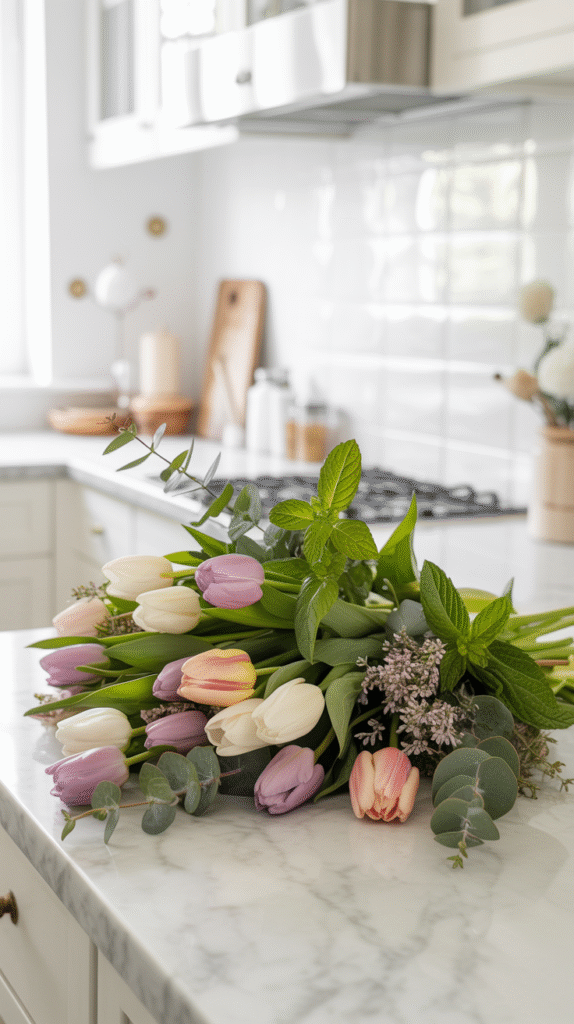
If you’re feeling a bit more adventurous than a single-variety bunch, mixing tulips with other textures is where you can really show off your eye for detail. But a warning: tulips are “bullies” in a mixed bouquet. Because they keep growing, they will eventually grow taller than the other flowers in the arrangement, making the whole thing look a bit lopsided after two days.
To counter this, pair them with things that have a similar “garden” feel but sturdier structures.
- Waxflower: These tiny, woody stems provide a great “nest” for the tulips to sit in.
- Eucalyptus: The silver-blue tones of eucalyptus look stunning against pale pink or white tulips.
- Fragrant Herbs: I’m a huge fan of tucking mint or even rosemary into a floral arrangement. It’s very “slow living” and makes your kitchen smell like a sophisticated apothecary instead of just… a kitchen.
When you’re arranging, try to place the sturdier branches in the vase first to create a grid. Then, thread the tulip stems through that grid. This keeps them exactly where you want them, even when they start their inevitable midnight stretching sessions.
Using Victorian Gothic Vases for Drama
Since we’re leaning into the “moody heroine” vibe of the tulip, why not go all out with the vessel? I’ve been scouring secondhand shops lately for dark, heavy glassware or tarnished silver pitchers. There is something so evocative about bright, spring-fresh tulips popping against a dark, moody background. It’s that contrast between life and decay that feels very “Poetcore.”
If you find a vase with a narrow neck, use it for just one or two stems of a “Parrot” tulip. These are the ones with the ruffled, fringed edges that look like they were painted by an artist who had a bit too much absinthe. They don’t need friends; they are a whole personality on their own. One or two of those on a stack of old books? (Chef’s kiss.) It’s the easiest way to make a room feel styled without actually doing any work.
Why You Should Try the “Forced Bulb” Look
If you really want to embrace the slow-living philosophy, look for tulips that are sold with the bulbs still attached. You can often find these in the early spring. Instead of cutting them, you can “plant” them in a shallow bowl filled with stones or moss and just a tiny bit of water at the bottom.
It feels a lot more permanent and intentional. Watching the bulbs slowly sprout and bloom over a week is a very grounding ritual. It reminds you that things take time. (Plus, it’s a great way to pretend you’re a master gardener even if the only thing you’ve successfully kept alive is a very resilient sourdough starter and a cat named Mr. Whiskers.)
Once the blooms eventually fade, you can actually save the bulbs! Cut the spent flower off, let the foliage die back naturally (which is admittedly not the most aesthetic phase, but bear with me), and then store the bulbs in a cool, dry place to plant in the garden later. It’s the gift that keeps on giving.
Common Mistakes to Avoid with Your Tulip Arrangements
You bring home a gorgeous bouquet, and by sunset, it looks like a disaster. Usually, it’s one of these three things:
- Too Much Water: Tulips actually don’t like to be drowned. They only need a few inches of water in the bottom of the vase. If the water is too high, the stems can get soft and mushy. Just keep an eye on it and top it off daily.
- Direct Sunlight: I know, I know—we want to put our flowers in the sunny window where they look like a dream. But tulips will literally “cook” in direct heat. They’ll open up too wide too fast and drop their petals within forty-eight hours. Keep them in a cool, shaded spot if you want them to last.
- The Fruit Bowl Faux Pas: Never put your flower arrangement next to a bowl of ripening fruit. Fruit (especially apples and bananas) gives off ethylene gas, which is basically poison for cut flowers. It will make your tulips age in hyper-speed.
One Thing to Try
At the end of the day, the best tulip arrangement ideas aren’t about perfection. They’re about bringing a little bit of the outside world into your space to remind you that the seasons are shifting, even when you’re stuck inside doing paperwork.
If you find yourself stressing over a stem that won’t stay put, just let it be. There is a beauty in the “imperfection” of a flower that chooses its own path. (I’m trying to apply this same logic to my own life, though Barry usually just calls it “being messy.”)
Tonight, try this: take three stems out of your main bouquet and put them in a tiny bud vase on your nightstand. It makes waking up tomorrow feel about 10% more romantic. You don’t need a massive, professional display to feel the “slow living” benefits; you just need to notice the way the light hits the petals.
Frequently Asked Questions About Tulip Arrangement Ideas
Why Do My Tulips Keep Drooping In The Vase
Tulips have incredibly stretchy stems that continue to grow after they are cut, which often causes them to arch under their own weight. It is not necessarily a sign of death, but rather a result of gravity acting on their rapid, phototropic growth as they reach for the nearest light source.
How Do You Make A Tulip Arrangement Last Longer
The secret to longevity is keeping the water shallow and very cold, as deep water can actually cause the stems to become soft and waterlogged. Change the water every other day and give the stems a fresh, sharp trim to ensure they can keep drinking without bacterial interference (which is the ultimate mood killer).
Should You Put A Penny In The Water For Tulips
While the copper in older pennies is thought to act as a natural fungicide, the modern consensus is that clean, cold water and a drop of flower food are far more effective. It is one of those charming garden myths that feels very nostalgic, but mostly just leaves you with a slightly metallic-smelling vase.
Can You Mix Tulips With Other Flowers
You can certainly mix them, but you must remember that tulips are the “bullies” of the spring bouquet because they grow faster than their companions. Try pairing them with woody stems like waxflower or eucalyptus that can provide a sturdy structural cage to keep those wandering tulip heads in their designated places.
What Is The Best Way To Arrange Tulips In A Tall Vase
Choose a vessel that covers at least half the height of the stems to provide adequate support for their bottom-heavy structure. If the vase is too wide, the stems will splay awkwardly to the sides, so look for something with a slightly tapered neck to keep the bunch looking intentional and lush.
How Do You Do The Tulip Petal Reflexing Hack
Gently use your thumb to flip the outer petals of a room-temperature tulip backward until they stay open, creating a look that mimics a garden rose. It is a total “lazy smart” trick that works best on flowers that have been out of the fridge for a few hours, making a cheap grocery store bunch look SHOCKINGLY expensive.
Why Are My Tulips Opening Too Wide
Tulips open and close based on light and temperature, so if yours are looking a bit too “spread out,” they are likely just too warm. Move the arrangement to a cooler spot away from direct sunlight or heaters (which, honestly, is also my preferred environment for a long afternoon nap) to help them tighten back up.
Is It Normal For Tulip Stems To Grow After Cutting
Yes, tulips are one of the few flowers that actually increase in length after being placed in a vase. This growth is caused by cell elongation in the stem, meaning your perfectly composed arrangement will likely look completely different forty-eight hours later as the stems seek out the light.
How Do You Get The Best Tulip Arrangement Ideas For Small Spaces
For smaller nooks, I love using a single, architectural stem in a heavy glass bud vase to lean into that minimalist, Poetcore aesthetic. You do not always need a massive bundle to make a statement; sometimes three perfectly reflexed tulips on a nightstand offer more “slow living” energy than a giant centerpiece ever could.
Loved this post?

ABOUT THE AUTHOR
Lisa, Slow Living Enthusiast
Hi, I’m Lisa. I write about slow living, nervous system care, and creating calm, intentional routines for everyday life. After spending 10 years living in Europe, I learned firsthand the art of savoring moments, embracing simplicity, and letting life unfold at a more human pace. My mission is to help you soften the edges of modern life and create space for a more intentional way of living.

ABOUT THE AUTHOR
Lisa, Slow Living Enthusiast
Hi, I’m Lisa. I write about slow living, nervous system care, and creating calm, intentional routines for everyday life. After spending 10 years living in Europe, I learned firsthand the art of savoring moments, embracing simplicity, and letting life unfold at a more human pace. My mission is to help you soften the edges of modern life and create space for a more intentional way of living.