
Classic Tuna Melt Sandwich Recipe: The Ultimate Comfort Ritual
This post may contain affiliate links, which means I may earn a small commission if you make a purchase through these links — at no extra cost to you. Thank you for supporting the content I create here on the blog! You can read my full Disclosure Policy for more details.
In this article
The smell of toasting rye bread and sharp cheddar always pulls me back to that drafty, four-flight walk-up in Whitechapel where the kitchen was roughly the size of a postage stamp. Making a classic tuna melt sandwich recipe in a space that small forces you to become a minimalist out of pure necessity, dodging the laundry rack while waiting for the cheese to hit that specific, bubbling point of no return. It is the definitive “slow living” lunch—simple, resourceful, and deeply nostalgic for anyone who has ever found sanctuary in a hot pan and a tin of fish while rain streaks the window in grey-blue patterns.
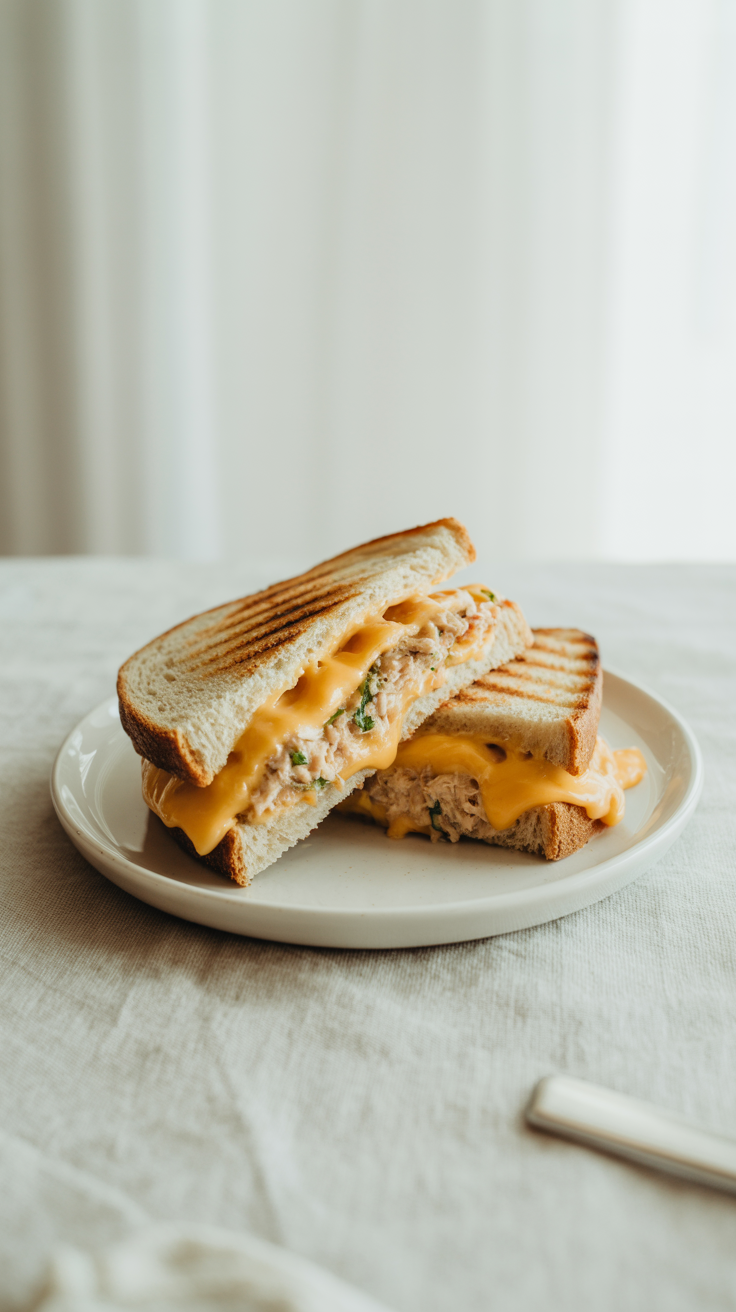
To make the perfect classic tuna melt, combine high-quality flaked tuna with mayonnaise, diced celery, and red onion, then grill the mixture between buttered sourdough or rye bread with thick slices of sharp cheddar cheese. Cook over medium-low heat until the bread is golden brown and the cheese is fully melted and fused to the tuna.
Why You’ll Love This Tuna Melt
- The CRUNCH-TO-CHEW ratio is mathematically superior to any other sandwich in existence.
- It utilizes pantry staples that you definitely already have hiding behind that jar of pickles you bought in 2023.
- It feels like a warm hug from a sensible grandmother who doesn’t believe in your “gluten-free phase.”
- The entire process takes less than fifteen minutes, including the time spent staring out a rainy London window.
The Science Behind The Classic Tuna Melt Sandwich Recipe
The magic of a tuna melt isn’t just luck; it is a result of the Maillard reaction (the chemical reaction between amino acids and reducing sugars that gives browned food its distinctive flavor). When you butter the outside of the bread, the fats and solids brown evenly against the cast iron, creating a structural lattice that prevents the bread from turning into a soggy mess. Using a lid during the cooking process creates a localized steam chamber (convection) that melts the cheese from the top down before the bread burns on the bottom.
We also have to talk about Emulsification Stability. By mixing the tuna thoroughly with mayo before it hits the heat, you are creating a protective fatty barrier around the protein. This prevents the tuna from drying out and becoming “chalky” when exposed to high temperatures (a thermodynamic disaster we must avoid). If you just slapped dry tuna on bread with a slice of cheese, the moisture would evaporate instantly, leaving you with a sad, dusty sandwich that even Mr. Whiskers would judge from his perch on the fridge.
Functional Ingredients
- Canned Tuna: The backbone of the operation; look for “Pole and Line Caught” for better texture and less mush.
- Full-Fat Mayonnaise: This acts as the binder and the moisture-lock (essential for preventing dry fish).
- Sharp Cheddar: You need a high-oil, aged cheese that has enough personality to stand up to the brine of the tuna.
- Red Onion and Celery: These provide the “Aromatic Crunch” that breaks up the richness of the fats.
- Dijon Mustard: Adds a necessary acid hit to cut through the heavy mayo and cheese.
- Salted Butter: For the exterior of the bread; oil just doesn’t provide that 1960s diner-style crust.
Essential Equipment
- Cast Iron Skillet: The heavy bottom ensures even heat distribution so you don’t get “hot spots.”
- Fish Turner or Wide Spatula: You need something sturdy to flip the sandwich without the filling sliding into the abyss.
- A Small Pot Lid: To trap the heat and ensure the cheese actually melts before the bread carbonizes.
Why Is My Tuna Melt Soggy? (And Other Expert Pro Tips)
- DRAIN THE TUNA LIKE YOUR LIFE DEPENDS ON IT. Any leftover canning liquid will turn your sandwich into a swampy disaster within three minutes of hitting the pan.
- The Cold Pan Technique: Start your sandwich in a cold skillet. As the pan heats up, the butter renders and slowly soaks into the bread fibers before the searing begins, creating a “shatter-crisp” crust that is impossible to achieve with a screaming hot pan.
- Grate your own cheese. Pre-shredded cheese is coated in cellulose (wood pulp, basically) to keep it from sticking in the bag, which prevents it from melting into that gooey pull we want.
- The “Low and Slow” Method is non-negotiable. If your heat is too high, you will have black bread and cold, unmelted cheese in the middle.
- Season the tuna mix BEFORE it goes on the bread. Taste it. Does it need more pepper? This is your only chance to fix the flavor profile.
Troubleshooting Your Melt
- Soggy Bread: Use a heavier bread like sourdough and press the tuna between paper towels first.
- Cheese Isn’t Melting: Use a lid to trap steam and grate the cheese instead of slicing it.
- Tuna Falling Out: Increase the mayo slightly and keep the filling about half an inch from the crust edge.
- Burnt Exterior, Cold Interior: Turn the burner down to medium-low and be patient; good things take more than two minutes.
How To Make The Classic Tuna Melt
Prep time: 7 minutes | Cook time: 8 minutes | Yield: 2 Sandwiches
Ingredients
- 2 cans (5 oz each) Albacore tuna, drained thoroughly
- 1/4 cup Full-fat mayonnaise
- 1 tablespoon Dijon mustard
- 2 tablespoons Red onion, finely minced
- 2 tablespoons Celery, finely diced
- 1 tablespoon Fresh parsley or dill, chopped
- 1/2 teaspoon Cracked black pepper
- 4 thick slices Sourdough or Rye bread
- 4 slices Sharp white cheddar cheese
- 3 tablespoons Salted butter, room temperature
Instructions
- In a medium bowl, flake the drained tuna with a fork until no large chunks remain.
- Add the mayonnaise, mustard, red onion, celery, parsley, and pepper (I usually forget the parsley and then have to dig through the crisper drawer while Barry yells that he’s starving, so prep ahead).
- Mix until the tuna is fully coated and the aromatics are evenly distributed.
- Butter one side of each slice of bread generously, making sure to reach the very edges.
- Place two slices of bread, butter-side down, in a cold cast iron skillet.
- Layer one slice of cheese on each piece of bread, then mound the tuna mixture on top.
- Add the second slice of cheese over the tuna (the “Cheese Sandwich” technique) and top with the remaining bread, butter-side up.
- Turn the heat to medium-low and cover the pan with a lid for 3-4 minutes.
- Once the bottom is deep golden brown, carefully flip the sandwich.
- Press down slightly with your spatula to “set” the melt and cook for another 3 minutes uncovered until the second side is crispy.
Storage & Reheating For Texture
Tuna melts are notoriously bad travelers. If you must save half, wrap it tightly in foil and store it in the fridge for no more than 24 hours. To reheat, NEVER use the microwave unless you enjoy the texture of wet cardboard and hot, fishy sponge. Instead, throw it back into a dry skillet over low heat for about 4 minutes per side. This will revive the crust and gently re-melt the cheese without overcooking the tuna.
If you are meal-prepping, keep the tuna salad in an airtight container and only assemble and grill the sandwich when you are ready to eat. The salad itself stays fresh for up to three days, but the bread will surrender to the moisture almost immediately if pre-assembled.
A Tiny Thing to Try
We spend so much time trying to “optimize” our lives with complex recipes and exotic ingredients, but there is power in mastering something as humble as a tuna melt. It represents the ability to find luxury in the mundane—to take a tin of fish and some stale bread and turn it into a ritual of warmth and safety in a chaotic world.
Tonight, put your phone in another room. Turn off the overhead lights and let the blue twilight of the window be your guide, even if you’re just sitting at your cluttered kitchen table. The simple act of paying attention to the sizzle of the butter and the way the cheese yields to the heat is enough to ground you. Eat your sandwich slowly, while it’s still too hot to handle, and remember that you don’t need a massive kitchen or a perfect life to create something that feels like home.

If you ever feel like your system just needs a reset, this is what I use.
I created this 5-minute reset system with 6 simple one-page resets for nights, mornings, overwhelm, busy thoughts, and tense-body stress. It’s for real moments when you need to feel better fast.
Frequently Asked Questions About the Classic Tuna Melt Sandwich Recipe
What Is The Best Bread For A Classic Tuna Melt Sandwich Recipe?
A sturdy, thick-cut sourdough or rye is the gold standard because it handles the weight of the tuna without disintegrating. You want a bread with enough structural integrity to withstand the butter-to-pan contact while providing a sour, fermented contrast to the creamy filling.
Can I Make A Tuna Melt In The Air Fryer?
You can definitely use an air fryer, but you risk the top slice of bread flying off due to the high-velocity fan. Secure it with toothpicks and cook at 375 degrees for about five minutes (which is what I do when I’m too lazy to wash the cast iron).
Why Does My Tuna Melt Always Fall Apart?
Your melt is likely falling apart because there isn’t enough binder or the cheese hasn’t acted as the “glue.” Ensure you use enough mayonnaise and place a slice of cheese on both the top and bottom of the tuna to fuse everything together.
Is It Better To Use Oil Or Butter For A Classic Tuna Melt Sandwich Recipe?
Always use salted, room-temperature butter for the exterior of your bread. While oil provides crunch, butter contains milk solids that brown into a nutty, diner-style crust that oil simply cannot replicate (it’s the secret to that specific childhood nostalgia flavor).
How Do I Keep My Tuna Melt From Being Fishy?
To neutralize a heavy fish scent, add a bright acid like lemon juice or a sharp Dijon mustard to your tuna mixture. Using high-quality, pole-caught white albacore also results in a much milder flavor profile than the standard “chunk light” varieties.
Why Is My Tuna Melt Soggy On The Bottom?
Sogginess usually happens because the tuna wasn’t drained well enough or the pan was too hot, causing moisture to trap against the bread. Use the cold-start method and medium-low heat to allow the bread to crisp up before the tuna releases any internal steam.
What Kind Of Cheese Goes On A Classic Tuna Melt?
Sharp cheddar is the traditional choice because it melts beautifully and has a punchy flavor that stands up to the aromatics. If you want a more mild experience, Muenster or Havarti are excellent alternatives that provide a SUPERIOR cheese pull.
Can I Make The Tuna Salad For This Recipe In Advance?
You can absolutely prep the tuna mixture up to three days in advance if kept in an airtight container in the fridge. Just don’t assemble the sandwich until you are ready to grill it, or the bread will absorb the moisture and become a total mess.
Loved this post?

ABOUT THE AUTHOR
Lisa, Slow Living Enthusiast
Hi, I’m Lisa. I write about slow living, nervous system care, and creating calm, intentional routines for everyday life. After spending 10 years living in Europe, I learned firsthand the art of savoring moments, embracing simplicity, and letting life unfold at a more human pace. My mission is to help you soften the edges of modern life and create space for a more intentional way of living.

ABOUT THE AUTHOR
Lisa, Slow Living Enthusiast
Hi, I’m Lisa. I write about slow living, nervous system care, and creating calm, intentional routines for everyday life. After spending 10 years living in Europe, I learned firsthand the art of savoring moments, embracing simplicity, and letting life unfold at a more human pace. My mission is to help you soften the edges of modern life and create space for a more intentional way of living.