
How to Get Pink Nails Naturally with This Easy DIY Nail Stain (Plant-Based)
This post may contain affiliate links, which means I may earn a small commission if you make a purchase through these links — at no extra cost to you. Thank you for supporting the content I create here on the blog! You can read my full Disclosure Policy for more details.
Conventional nail polish is essentially a toxic relationship: it looks STUNNNNING for forty-eight hours, then starts gaslighting you by flaking off and taking layers of your actual nail with it.
I spent ten years living in London (a decade of my life!), and let me tell you, the moody, damp UK air is where manicures go to die. Between the constant rain and the humidity, my “aesthetic” salon sets would lift and peel within days.
I spent a small fortune trying to look like a polished Londoner, only to end up with brittle, yellowed nails hidden under a shell of chemicals. It was a cycle of “fix and break” that felt the opposite of intentional living.
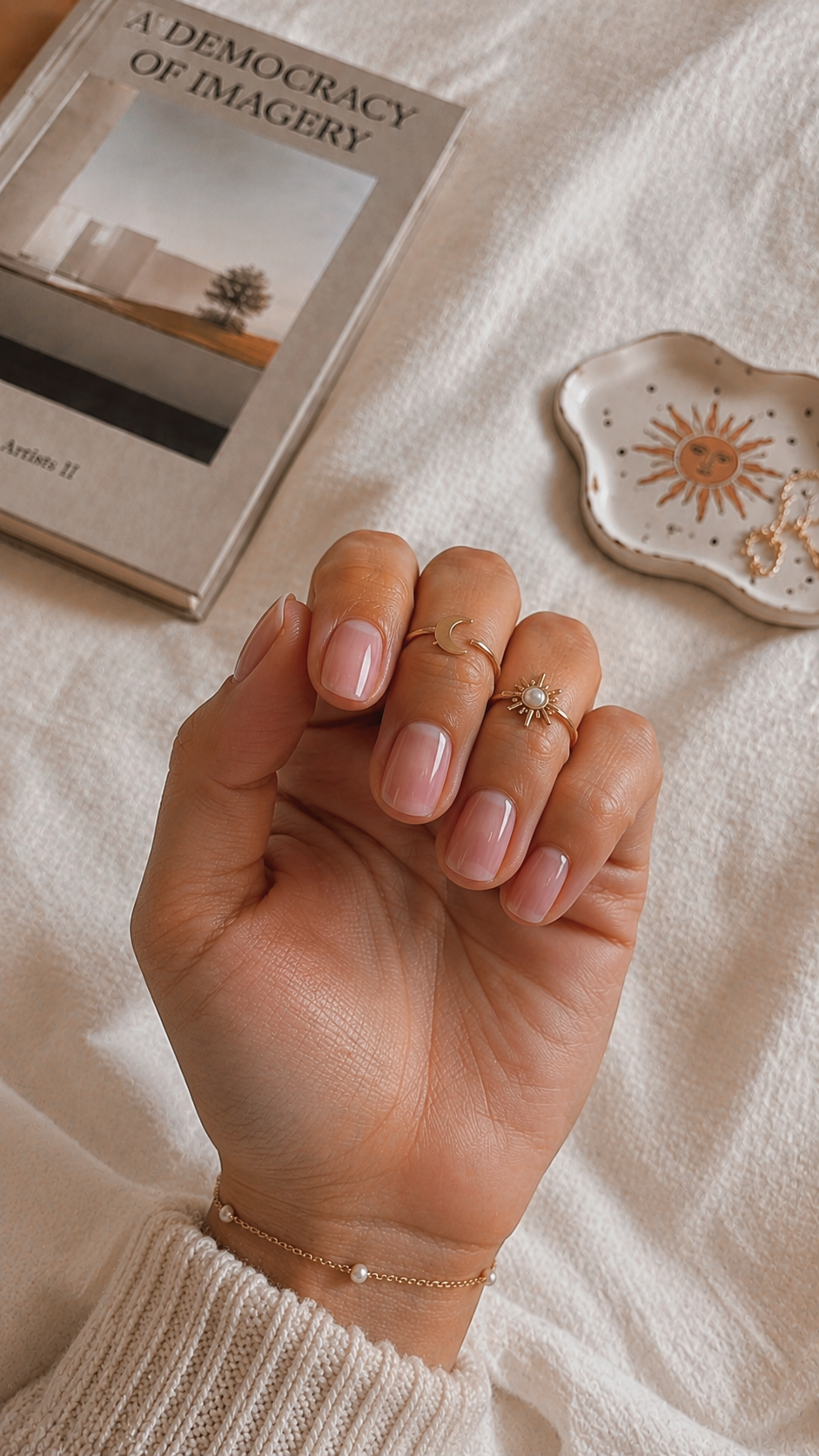
I’ve realized that the most sophisticated look isn’t a thick, plastic-like shell. It’s the “your nails but better” glow.
I want my hands to look like I spend my days pressing wildflowers and sipping expensive oat milk matcha (iced, always, even in a blizzard), not like I’m hiding peeling keratin under a layer of formaldehyde.
This botanical stain is the answer for the girl who wants the aesthetic of a soft blush manicure but has the “chaotic” health reality of fighting low iron and hair fall—it’s a struggle, truly, and my hair needs all the help it can get (and no, Barry, “taking a nap” is not a medical cure for anemia, though I appreciate the effort).
SPOILER: If you want that translucent, iconic sheer-pink glow instantly without mixing a potion, check out my post on the Best Dior Nail Glow Dupes on Amazon!
The Science Of The Stain
If you’re used to standard polish, the concept of a “stain” might feel a bit… experimental. But there is actual science happening here. Traditional polish creates a non-breathable barrier. It sits on top, suffocating the nail bed and trapping moisture or bacteria underneath. A botanical stain, however, utilizes the porous nature of your nails.
Your nails are made of keratin—the same protein found in your hair. Just as a plant-based rinse can tint your hair, ingredients like hibiscus and pink clay allow pigments to absorb into the keratin layers. You aren’t just painting; you are dyeing the fabric of the nail itself.
The result is a semi-permanent, breathable tint that doesn’t “chip” because it is literally part of the nail. It fades gracefully over time, like a well-loved linen dress, rather than shattering like glass. Plus, while it’s sitting there looking DREAAAAMY, it’s actually delivering minerals and antioxidants directly into the nail plate.
Why This Is Better Than Your Current Mani
It Is A Literal Multivitamin For Your Hands
Instead of stripping your nails with acetone (which is essentially paint thinner, let’s be honest—why do we let that stuff near our bodies???), this process feeds them.
- Hibiscus Powder: Often called the “Botox plant” for skin, hibiscus is a powerhouse of amino acids and antioxidants. On your nails, it supports keratin production, which is a must if your nails feel like they snap if you even look at them the wrong way.
- Pink Clay: This is the unsung hero of structural beauty. It’s high in Silica, calcium, and magnesium. Silica is essentially the “glue” that keeps our hair, skin, and nails strong. By applying this clay, you’re reinforcing the nail’s architecture (it’s giving: structural integrity).
- Sweet Almond Oil & Rosewater: These provide the hydration and flexibility needed to prevent that dreaded peeling. Barry (my British husband who could sleep through a Ghost concert, bless him) always wonders why I have so many little glass jars in the bathroom, but the difference in my nail strength since switching to these oils is undeniable.
The Graceful Fade
There is nothing less “Quiet Luxury” than a half-chipped red manicure. Because this is a stain, there are no harsh lines as it grows out or wears off. You skip the acetone-induced dryness entirely. Acetone is notorious for stripping the natural lipid barrier of the nail, leaving them white and chalky. A stain eliminates that trauma entirely.
The Ghost Protocol (A Vital Aesthetic Choice)
If you’re feeling a bit “woo,” this is a moment to set an intention. Using hibiscus and rosewater isn’t just about the tint; it’s about inviting in self-love and harmony.
Now, as a massive fan of the band Ghost (I am fully obsessed—I’m currently deeply lost in the Prequelle and Impera eras), I like to think of my nail stain intensity in terms of the Papas. A light, watery stain? That’s very Papa Emeritus I—subtle, foundational, a bit mysterious. But a deep, double-layered hibiscus berry? That’s full Papa IV/Copia energy—bold, charismatic, and a little bit “extra” in the best way possible. If you aren’t listening to Kaisarion while you do your nails, are you even living???
The Botanical Pink Stain Recipe
This makes about 1.5 tablespoons, which is enough for 5–8 applications (or one very thorough self-care Sunday where you pretend your phone doesn’t exist).
The Base
- 1 tbsp Hibiscus Powder: This provides that deep, floral pigment.
- ½ tsp Pink Clay: For mineral reinforcement and a soft, dusty rose undertone.
- 1 tsp Rosewater: To hydrate the nail plate so it remains flexible.
- ½ tsp Sweet Almond Oil: To seal in moisture and add a natural sheen.
The Add-Ons
- 1 tsp Lemon Juice or Apple Cider Vinegar: The acidity helps “open” the keratin scales so the pigment can sink in deeper. (Trust the process!)
- 1–2 drops Essential Oil: Rose or Geranium for a high-end spa scent, or Vanilla if you’re feeling cozy and want to smell like a literal cupcake.
The Ritual: Step-By-Step
Step 1: The Canvas Prep
Start with clean, bare nails. Give them a very light buff—just enough to take off the natural surface oils. If your nails are naturally “oily” (yes, that’s a thing), the pigment won’t stick. Swipe each nail with a cotton pad soaked in lemon juice. This lowers the pH and preps the surface. Pro tip: apply a little almond oil to your cuticles before you start so you don’t accidentally stain your skin pink for three days straight.
Step 2: Mixing The Elixir
In a small ceramic bowl (plastic WILL stain, don’t say I didn’t warn you!), mix your hibiscus, pink clay, and rosewater. Stir slowly until it’s a smooth, paintable paste. If it’s too thick, add rosewater drop by drop. You want it to be the consistency of a high-end face mask. Fold in your almond oil and essential oils last.
Step 3: The Application
Using a small brush, apply a thin, even layer to each nail. This is the part where you lean into the “Slow Beauty” movement. Don’t rush. Let the stain sit for 10–15 minutes. I usually use this time to visualize my future life in a cottage in the Cotswolds. For a deeper color, apply a second layer once the first has dried slightly.
Step 4: The Reveal
Rinse your hands under lukewarm water. DO NOT use soap yet—give the pigment a chance to settle into the nail. Pat dry with a soft towel. To finish, massage a drop of jojoba or almond oil into each nail. Your nails will look glowy, healthy, and perfectly flushed…… STUNNNNING.
Maintenance & Customization
- How Long Does It Last? Typically 2–5 days. Since it doesn’t chip, it just looks like your natural nail color is slowly returning to its “natural” state. Reapply every few days to build a perolmanent-looking tint. (Prefer a quick brush-and-go option for busy weeks? I rounded up the Best Dior Nail Glow Dupes for that exact same effortless, healthy sheer tint).
- Custom Colors: If you want a more “vampy” look, add a pinch of pomegranate powder. For a classic French manicured look, apply the stain only to the tips or the beds.
- Storage: Keep your mixture in a small airtight jar in the fridge for up to 5 days. For long-term use, mix the dry hibiscus and clay and keep them in your vanity; just add the liquid components when the mood strikes.
One Thing To Try
Tonight, instead of reaching for the polish remover and a fresh coat of “Sand Tropez” (we’ve all been there), I want you to give your nails a “recovery soak.” Simply dip your fingertips into a small bowl of warm olive oil or almond oil for five minutes. It’s a tiny, quiet luxury that repairs the damage from weeks of traditional polish. Your cuticles will thank you, and you’ll be perfectly prepped for your botanical stain tomorrow morning. It’s simple, it’s grounded, and it feels SOOOO good.
FAQs
Is a nail stain actually better for you than “clean” nail polish?
Honestly? YES. Even the most “10-free” or “non-toxic” polishes still act like a plastic wrap for your nails. They block oxygen and moisture, which is why your nails often look like a desert landscape once you peel the polish off. A botanical stain is truly breathable and plant-based. It’s like the difference between wearing a polyester jumpsuit and a silk slip—both are cute, but one lets your skin actually exist.
Will this stain my cuticles or my favorite white linen towels?
Okay, listen—if you’re as chaotic as I am after three espressos, yes, things might get messy. Hibiscus pigment is NO JOKE. This is why the almond oil “barrier” around your cuticles is a non-negotiable step. As for your towels? Use a dark one or an old t-shirt during the rinse phase. Don’t be the person who ruins their DREAAAAMY white linens because they were too busy air-drumming to Ghuleh / Zombie Queen (guilty).
What if I want a more “vampy” berry shade instead of soft pink?
This is where you get to be the alchemist. If you’re channeling a more brooding, Papa Emeritus II vibe, just keep layering. Apply, wait 15 minutes, rinse, and repeat. You can also add a pinch of beetroot, pomegranate, or cranberry powder to the mix for a deeper, cooler-toned wine color that looks absolutely UNREAL.
Why did my nail stain wash off immediately?
If the color didn’t “take,” it’s usually one of two culprits: Oils or pH. If you didn’t buff the nail surface or use the lemon juice/vinegar swipe, the pigment literally can’t find a way into the keratin. Think of it like trying to dye a raincoat—it’s just going to slide right off. Make sure those nails are squeaky clean and slightly “prepped” with a buffer before you apply the paste.
How do I get the stain OFF if I change my mind?
Since this isn’t a surface coating, you can’t just “wipe” it away with acetone. But don’t panic! It will naturally fade as you wash your hands over 2–5 days. If you’re in a rush to return to your natural nail color, a gentle buffing and a soak in warm lemon water will help lift the pigment much faster. It’s a commitment-lite relationship—perfect for those of us with aesthetic indecision