
How to Get Expensive-Looking Hands: The Ultimate No-Polish Nail Routine
This post may contain affiliate links, which means I may earn a small commission if you make a purchase through these links — at no extra cost to you. Thank you for supporting the content I create here on the blog! You can read my full Disclosure Policy for more details.
The dream of a nail routine that makes your hands look expensive usually starts at the most inconvenient time—like when you’re staring at a half-chipped gel manicure during a meeting, wondering when “self-care” started feeling like a part-time job. We have been conditioned to believe that “expensive hands” require a UV lamp, a standing appointment, and thirty dollars plus tip every two weeks. But there is a shift happening toward the no-polish manicure, a look that prioritizes the health of the nail plate and the hydration of the skin over the temporary camouflage of color.
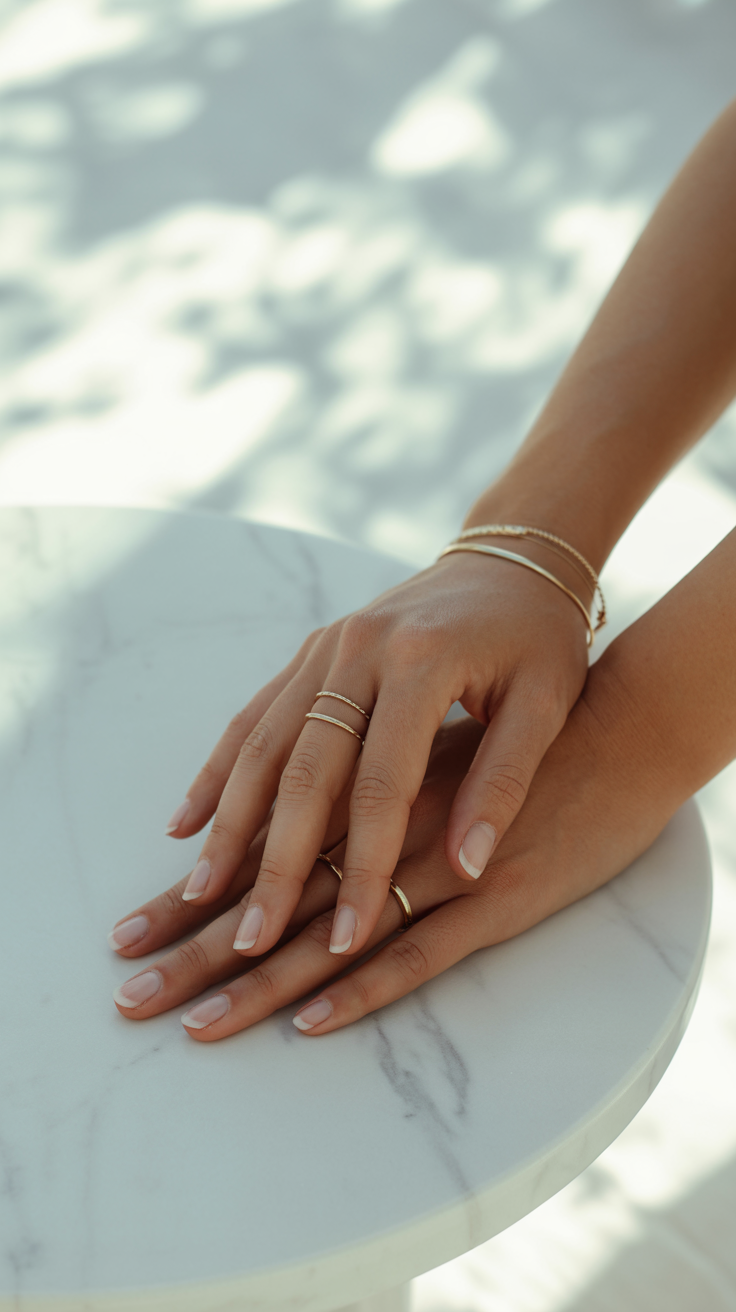
An expensive-looking nail routine is about the precision of your habits. To make your hands look expensive without polish, you must focus on three core pillars: uniform nail shape, meticulous cuticle health, and consistent skin hydration. This aesthetic, often called the “rich girl nail,” relies on a clean, high-shine natural nail bed and a total absence of hangnails or dry patches. It is the ultimate expression of slow living for your hands—a routine that feels grounded, intentional, and remarkably low-maintenance once the foundation is set.
Quick Answer: How to Make Your Hands Look Expensive Without Polish
To achieve a polished, expensive look on natural nails, you need a routine that emphasizes structural health and hydration. By removing the distraction of color, you draw attention to the “canvas”—the skin and the nail itself.
The essential steps for a natural nail routine include:
- Uniform Shaping: Using a glass file to create a soft oval or “squoval” shape.
- Cuticle Care: Gently pushing back cuticles and using a chemical exfoliant instead of cutting.
- Buffing for Shine: Using a high-grit buffer to create a glass-like finish on the nail plate.
- Deep Hydration: Layering a high-quality cuticle oil under a thick, occlusive hand cream.
- Stain Removal: Using a brightening treatment to ensure the nail tips look clean and white.
Why The “No-Polish” Look Feels So Luxurious
When I lived in London, I noticed a very specific type of woman on the tube—the ones with the structured wool coats and the perfectly undone hair—and their nails were almost always bare. But they weren’t neglected. They were glowing. It’s that “I have my life together” energy that comes from a healthy nail bed and skin that looks like it’s never touched a harsh dish detergent in its life (even if Barry and I are currently arguing over whose turn it is to tackle the sink).
The secret to why this looks “expensive” is because it signals meticulous maintenance. Polish can hide a multitude of sins—dehydration, peeling, staining—but a bare nail hides nothing. When a bare nail looks good, it means the person behind it is hydrated, nourished, and takes the thirty seconds every night to apply oil. It’s a subtle flex of discipline. It’s the “Golden Girls” energy of being perfectly put together even in a silk robe at 7:00 AM.
Understanding the Anatomy of an Expensive Nail
To truly master a nail routine that makes your hands look expensive, you have to understand what’s actually happening under the surface. Most of us treat our nails like hard plastic, but they are living, breathing extensions of our skin. When you understand the anatomy, you stop making the mistakes that lead to brittle, “cheap-looking” edges.
The Nail Plate and Keratin
The part of the nail we see is the nail plate, made of layers of a protein called keratin. Think of these layers like the shingles on a roof. When the “shingles” are dry, they lift and peel, which is why your nails look ragged even when they are short. An expensive-looking nail is a sealed nail. By using a glass file, you are essentially “cauterizing” these layers together so they don’t catch on your favorite knit sweater.
The Lunula (The Half-Moon)
That little white crescent at the base of your nail? That’s the lunula. In the world of high-end aesthetics, a visible, clean lunula is a sign of a healthy, well-maintained nail bed. By properly managing your cuticles (without hacking them off like a woodchopper), you reveal more of this area, which creates a more elongated, “expensive” finger shape.
What Makes Hands Look Expensive?
We need to talk about the “Expensive Hand” blueprint because it’s not just about the nails themselves. If you have a thousand-dollar manicure but your knuckles are ashy and your cuticles are jagged, the effect is lost. The “expensive” look is a holistic situation involving the texture of your skin and the symmetry of your nail shape.
The Power of the Glass Nail File
If you are still using those gritty, orange emery boards from the grocery store checkout line, we need to have a heart-to-heart. Those boards create microscopic tears in the nail tip, which leads to peeling (and the eventual “I’ll just bite this off” spiral that ruins everything). A glass nail file is the single best investment for a no-polish nail routine. It seals the keratin layers of the nail as you file, leaving the edge perfectly smooth.
The “Squoval” Rule
Extremely long nails can look incredible, but they rarely look “natural expensive” without polish. For the bare look, a shorter length—just past the fingertip—is the gold standard. Aim for a “squoval” shape (a square with rounded edges) or a soft oval. This mimics the natural curve of your cuticle and makes your fingers look longer and more slender.
How Do You Make Natural Nails Look Polished?
The goal isn’t just “clean,” it’s “luminous.” You want your nails to catch the light as if you’re wearing a clear coat, even when you aren’t. This is where the buffing and brightening phase comes in.
Why Are My Nails Yellow?
One of the biggest hurdles to a no-polish routine is staining. If you’ve spent years wearing dark polishes without a base coat, your nails might have a lingering yellow tint. To fix this, you can create a simple paste of baking soda and lemon juice, or use a dedicated nail whitening scrub. It’s like a detox for your hands. Once you strip away the stains, the white of your free edge (the tip) pops against the pink of your nail bed, which is the universal sign of a healthy nail.
The High-Shine Buff
A four-way buffer block is your best friend, but use it sparingly. You don’t want to thin out your nail plate. Focus on the final “shining” side—the one that feels like smooth plastic. This friction creates a natural heat that brings out the oils in your nail, giving you a literal “glass skin” effect for your hands. It’s so satisfying that I’ve definitely spent an entire episode of a comfort show just buffing away (which is fine, but don’t overdo it or your nails will get too thin and sad).
Why Does Cuticle Health Matter So Much?
If the nail is the gem, the cuticle is the frame. You can have the most beautiful nails in the world, but if the skin around them is red, frayed, or dry, they won’t look “expensive.”
Stop Cutting Your Cuticles
This is the hill I will die on. When you cut your cuticles, you’re essentially telling your body to “send reinforcements,” which results in the skin growing back thicker, harder, and more prone to hangnails. Instead, use a cuticle remover gel (the chemical exfoliant kind) and a wooden orange stick to gently push them back. This clears away the “dead” skin on the nail plate—which is actually what a cuticle is—without creating the trauma that leads to jagged edges.
The Cuticle Oil Obsession
You need a cuticle oil in every room. One by the bed, one at your desk, one by the kitchen sink. I’m serious. If you want that expensive hand look, you have to hydrate after every single time you wash your hands. Look for oils with small molecules that can actually penetrate the nail—jojoba oil is the MVP here because its molecular structure is nearly identical to our skin’s natural sebum. It’s the difference between your hands looking “dry and tired” and “quietly wealthy.”
The Hand Skincare Routine (The “Face” of Your Hands)
We spend hundreds on serums for our foreheads while our hands—which show age faster than almost anywhere else—are out here surviving on a prayer and some cheap liquid soap. If you want the “Quiet Luxury” aesthetic, you have to treat your hands like they are made of fine silk.
| Step | Product Type | Benefit |
| Exfoliate | Lactic Acid or Sugar Scrub | Removes dullness and brightens skin tone. |
| Treat | Vitamin C or Retinol | Fades sunspots and boosts collagen. |
| Hydrate | Hyaluronic Acid | Plumps the skin to hide visible veins/tendons. |
| Seal | Ceramide Cream | Repairs the moisture barrier from constant washing. |
| Protect | SPF 30+ | Prevents “crepey” skin and future aging. |
The Nightly “Hand Facial”
To truly elevate your hands, apply your facial skincare leftovers to your hands. If you have an old Vitamin C or Hyaluronic Acid serum that didn’t quite work for your face, don’t throw it out. Use it on your hands. Apply a thick, urea-based cream or something with ceramides, then seal it all in with a thin layer of an occlusive (like a vegan balm or even a bit of Aquaphor).
If you do this before bed, you wake up with hands that look like they’ve spent the weekend at a spa in the Cotswolds instead of just scrolling through TikTok in the dark.
Common Mistakes That Make Your Hands Look “Cheap”
Sometimes, it’s not about what you’re doing, but what you’re not doing. Even the best nail routine can be sabotaged by a few tiny, subconscious habits.
- Using Your Nails as Tools: Every time you use your nail to scrape off a sticker or pry open a soda can, you’re creating micro-fractures in the nail. Use a butter knife. Use Barry. Just don’t use your nails.
- Forgetting SPF: We apply sunscreen to our faces every morning, but our hands are on the steering wheel getting direct UV exposure for hours. Sunspots and “crepey” skin are the opposite of the expensive aesthetic.
- Nervous Picking: We all do it. The little piece of skin by your thumb that looks like it needs to be pulled. It doesn’t. Leave it alone. (This is me speaking to myself as much as to you—I have definitely ruined a “perfect” hand week because of one stressful email).
The Mindset of Slow Beauty
There is a deep sense of peace that comes with embracing a natural nail routine. In a world that’s constantly telling us to “level up” and “add more,” choosing to “subtract” is a radical act of slow living. It’s about romanticizing the tiny, mundane moments—the way the steam rises off your vegan matcha with oat milk while you massage oil into your thumbs, or the quiet click of a glass file on a Sunday afternoon.
It reminds me of those rainy London mornings where everything felt gray and muted, but somehow more refined because of it. There is a beauty in the “undone” that feels much more permanent than a neon gel polish. It’s a routine that says: I have enough time to care for myself. It’s not about being perfect; it’s about being intentional.
One Thing to Try
If you want to start this journey tonight, do one thing: the Jojoba Soak.
Take a small bowl of warm water with a tablespoon of jojoba oil (or olive oil if that’s all you have in the pantry) and soak your fingertips for five minutes. While you soak, put on some quiet music—maybe a little moody Victorian Gothic playlist or some Ghost for a bit of “Papa Emeritus IV” energy—and just breathe. Afterward, gently push back your cuticles with a soft washcloth.
This one small act of hydration will immediately transform the texture of your nail beds and give you a glimpse of how “expensive” your natural hands can truly look. It’s a simple, grounded ritual that proves luxury isn’t something you buy; it’s something you cultivate through the way you treat yourself in the quietest hours of the day.
Frequently Asked Questions About The Nail Routine That Makes Your Hands Look Expensive
How Do I Make My Nails Look Expensive Without Using Polish?
Focus on the architecture of the nail rather than the surface color. A uniform “squoval” shape, tidy cuticles, and a high-shine buffing routine create a look of meticulous maintenance. It signals that you have the time and peace to care for the tiny details.
Why Do My Natural Nails Look Yellow Or Stained?
Staining usually happens from old polish pigments or everyday life (looking at you, turmeric lattes). Use a baking soda and lemon paste to gently brighten the plate. It’s like a deep-clean for your hands that instantly makes the tips look fresh and intentional.
How Can I Make My Hands Look Younger And More Polished?
Treat your hands like an extension of your face by using SPF daily and layering a hyaluronic acid serum under your moisturizer. Sun damage and dehydration are the main culprits behind “tired” hands. Hydrated skin has a plumpness that looks much more expensive.
Is It Better To Cut Or Push Back My Cuticles?
Always push them back gently using a chemical remover and an orange stick. Cutting creates trauma that causes the skin to grow back thicker and more jagged (which… rude). Pushing them back keeps the frame of the nail smooth and reduces annoying hangnails.
How Often Should I Use Cuticle Oil For The Best Results?
You should apply oil every single time your hands touch water. Keep a bottle at your desk and one by the sink to make it a reflex. Consistent hydration is the secret sauce that prevents peeling and gives you that “rich girl” glow.
Can A No Polish Nail Routine Actually Strengthen My Nails?
Absolutely, because you are avoiding the harsh scraping and chemical peeling associated with gel removals. By sealing the nail edges with a glass file and prioritizing moisture, you allow the keratin layers to bond. It’s a slow-beauty win for long-term nail health.
Why Do My Hands Look Dull Even When My Nails Are Clean?
Dullness is often just a buildup of dead skin cells and a lack of surface moisture. A weekly gentle exfoliation followed by a thick ceramide cream will restore that healthy, luminous reflection. It turns your hands from “just there” to “perfectly curated” (very London aesthetic, honestly).
What Is The Best Shape For A Natural Nail Routine?
A soft oval or a short “squoval” is the most universally flattering and expensive-looking shape. It elongates the fingers without the high-maintenance risk of breakage that comes with long points. It feels practical yet incredibly refined for daily life.