
7 Iced Drinks That Calm Your Nervous System (Better Than Coffee)
This post may contain affiliate links, which means I may earn a small commission if you make a purchase through these links — at no extra cost to you. Thank you for supporting the content I create here on the blog! You can read my full Disclosure Policy for more details.
If you are looking for iced drinks that calm your nervous system, you’ve likely realized that your daily caffeine habit is no longer serving your peace.
The problem isn’t just the caffeine; it’s the way we’ve tied our productivity to a chemical spike that eventually leaves us hollow. When our bodies are already under stress, adding a high-dose stimulant is like throwing kerosene on a campfire that was already getting a bit out of control. We want the ritual—the clink of ice, the straw, the aesthetic of a cold glass in our hand—without the soul-crushing cortisol spike that follows. Finding alternatives that support a regulated nervous system is about reclaiming that “quiet luxury” moment of a mid-day break without the physiological price tag.
Quick Answer: Best Iced Drinks That Calm Your Nervous System
If you need to lower your anxiety and support your adrenal health, switching from coffee to herbal-based iced drinks can significantly reduce jitteriness and cortisol production. These beverages use adaptogens, minerals, and nervine herbs to soothe the body while still providing a refreshing ritual.
The most effective iced drinks for nervous system regulation include:
- Iced Tart Cherry Juice with Magnesium
- Iced Oat Milk Matcha (Ceremonial Grade)
- Hibiscus and Rose Cold Brew Tea
- Iced Holy Basil (Tulsi) Tea
- Adrenal Creamsicle (Orange Juice, Coconut Milk, and Sea Salt)
- Iced Lemon Balm and Lavender Infusion
- Coconut Water with Trace Mineral Drops
Why Does Coffee Aggravate Your Nervous System?
I remember sitting in a tiny, drafty cafe in London—the kind where the steam on the windows obscures the grey sky and the floorboards creak with a century of secrets—and realizing that my “morning boost” was actually a one-way ticket to a panic attack by noon. Coffee stimulates the adrenal glands to release epinephrine and norepinephrine, the “fight or flight” hormones. For a person with a perfectly regulated system, this is a manageable spike. But for those of us juggling a million things, perhaps leaning into that Victorian gothic aesthetic of being “perpetually overwhelmed and slightly poetic,” coffee acts as a false alarm. It tells your brain there is an emergency when you’re actually just trying to answer an email.
When we drink iced coffee on an empty stomach (which I did this morning while ignoring my own advice because I am a hypocrite with a deadline), the caffeine enters the bloodstream almost instantly. This triggers a rapid rise in blood sugar followed by a crash, creating a cycle of “tired-but-wired” energy. This cycle keeps your nervous system in a state of hyper-vigilance. By choosing drinks that contain L-theanine, magnesium, or adaptogens, we are essentially telling our amygdala, “Hey, it’s okay. We are safe. There is no tiger; there is only a slightly messy kitchen and a very soft blanket waiting for us later.”
The biological reality is that caffeine blocks adenosine receptors. Adenosine is the chemical that builds up in your brain throughout the day to tell you that you’re tired. When you block it, you aren’t actually “creating” energy; you’re just borrowing it from your future self at a very high interest rate. Eventually, your nervous system loses its ability to find its own baseline of calm.
The Vagus Nerve and the “Cold” Component
There is an interesting bit of science regarding why we crave iced drinks when we are stressed. Cold exposure, even just sipping a very cold beverage, can momentarily stimulate the vagus nerve—the long “information highway” that tells your body to switch from the sympathetic (stress) state to the parasympathetic (rest and digest) state.
However, if you gulp a freezing drink too fast, you might actually shock the system. The “quiet luxury” approach is to sip slowly, letting the coldness ground you in the present moment. It’s a sensory anchor. When you feel that ice-cold glass against your palm, it pulls you out of a mental spiral and back into your physical body. It’s essentially a micro-meditation disguised as a beverage.
1. Iced Tart Cherry Juice with Magnesium
Mix 1/2 cup unsweetened tart cherry juice with 1 tsp magnesium powder and a splash of sparkling water over plenty of ice; it’s tart, moody, and very effective.
This is the ultimate “anti-anxiety” cocktail, and it looks incredibly chic in a fluted glass. Tart cherry juice is a natural source of melatonin and tryptophan, but its real power lies in its ability to reduce systemic inflammation. When our bodies are inflamed, our nervous systems are naturally more reactive. Adding a scoop of unflavored magnesium powder or a few drops of liquid magnesium turns this into a “sleepy girl mocktail” that works just as well at 3:00 PM as it does at 9:00 PM.
The magnesium acts as a gatekeeper for the NMDA receptors in the brain, preventing them from being overstimulated. It’s like putting a “Do Not Disturb” sign on your neurons. I like to top mine with a splash of sparkling water and a sprig of mint. It feels like something Papa Emeritus IV would sip if he decided to trade the dramatics for a spa day. It’s tart, it’s refreshing, and it doesn’t leave you with that hollow, shaky feeling in your chest.
(Honestly, I usually drink this while wearing a velvet robe and pretending I’m a character in a moody Brontë novel, which I highly recommend for maximum nervous system regulation).
2. Iced Oat Milk Matcha (Ceremonial Grade)
Whisk 1 tsp ceremonial grade matcha with 2 oz warm water until frothy, pour over a glass of ice and 1 cup creamy oat milk; use a glass straw to feel like you have your life together.
I know, I know. Matcha still has caffeine. But matcha is the “calm older sister” to coffee’s “chaotic middle child.” The magic ingredient here is L-theanine, an amino acid that promotes relaxation without drowsiness. It creates a synergistic effect with the caffeine, slowing its absorption and preventing the dreaded “crash.” Instead of a jagged spike, you get a gentle, sustained plateau of focus.
Making a ceremonial grade matcha with creamy oat milk is my peak “that girl” ritual. There is something so grounding about the whisking process—even if I’m doing it in a rush before Barry asks where the car keys are for the third time this hour. It’s a slow living staple. When you sip an iced matcha, you aren’t just caffeinating; you’re consuming antioxidants (specifically EGCG) that protect your cells from the oxidative stress that coffee can sometimes exacerbate.
I use a glass straw because I am committed to the aesthetic, even when my life feels like a Golden Girls episode where everything is going wrong simultaneously. The key is to find a matcha that is vibrant green—if it looks like hay, it’s going to taste like hay, and that is not going to help anyone’s nervous system.
3. Hibiscus and Rose Cold Brew Tea
Place 2 hibiscus tea bags and 1 tsp dried culinary rose petals in a jar with 2 cups cold water, steep in the fridge overnight, and strain over ice the next morning.
If your nervous system feels “hot”—meaning you feel irritable, flushed, or impatient—hibiscus is your best friend. In herbalism, hibiscus is known for its cooling properties. It’s incredibly high in Vitamin C and has been shown to help maintain healthy blood pressure levels, which often spike when we are stressed. Adding dried rose petals to the brew adds a layer of “heart-opening” energy, which sounds very woo-woo until you realize how much tension we hold in our chests when we’re anxious.
I like to cold-brew this overnight in a large glass jar. By morning, it’s a deep, vampiric red that satisfies my Victorian gothic soul. It’s tart and floral, and it completely replaces the need for a sugary iced tea. Drinking this feels like a reset button for your internal temperature. It’s the liquid equivalent of changing into linen pajamas and turning on a fan after a long day in the sun. It’s also naturally caffeine-free, so you can drink it in massive quantities without your heart rate hitting 120 bpm while you’re just sitting on the couch.
4. Iced Holy Basil (Tulsi) Tea
Steep 2 Tulsi tea bags in 1 cup hot water for 5 minutes, let it cool slightly, then pour over a tall glass of ice with a squeeze of fresh lime for a spicy, grounding kick.
Holy Basil, or Tulsi, is an adaptogen, which is basically a botanical thermostat for your stress response. If you’re too high (anxious), it brings you down. If you’re too low (fatigued), it brings you up. It specifically targets cortisol, the hormone that makes us carry “stress weight” and keeps us awake at 2:00 AM wondering if we were rude to a cashier in 2014.
The taste is slightly spicy, almost like a mix between peppermint and cloves. When iced, it is incredibly refreshing. I often find that when my nervous system is fried, my digestion is also a mess. Tulsi helps soothe the “gut-brain axis,” making it a dual-purpose drink for when you’re feeling physically and emotionally fragile. It’s a quiet, humble herb that does a lot of heavy lifting for your mental clarity. It’s very “old-world apothecary” energy, which I find deeply comforting.
5. The Adrenal Creamsicle
Shake 1/2 cup orange juice, 1/4 cup full-fat coconut milk, and a generous pinch of flaky sea salt in a jar until combined, then pour over crushed ice.
This drink went viral for a reason: it actually works. Your adrenal glands—those tiny hats sitting on your kidneys—thrive on three things: Vitamin C, potassium, and sodium. When we are stressed, we deplete these minerals rapidly. The “Adrenal Creamsicle” (a mix of orange juice, coconut milk, and a pinch of high-quality sea salt) provides a perfect ratio of whole-food glucose and minerals to nourish the adrenals.
The coconut milk provides healthy fats that slow the absorption of the fruit sugar, preventing a glucose spike. It tastes like a nostalgic childhood treat but acts like a medicinal tonic. It’s the easiest way to stop a mid-afternoon meltdown in its tracks. Honestly, it’s much better than my usual strategy of staring blankly at the fridge until I give up and eat a spoonful of peanut butter while standing in the light of the open refrigerator door.
6. Iced Lemon Balm and Lavender Infusion
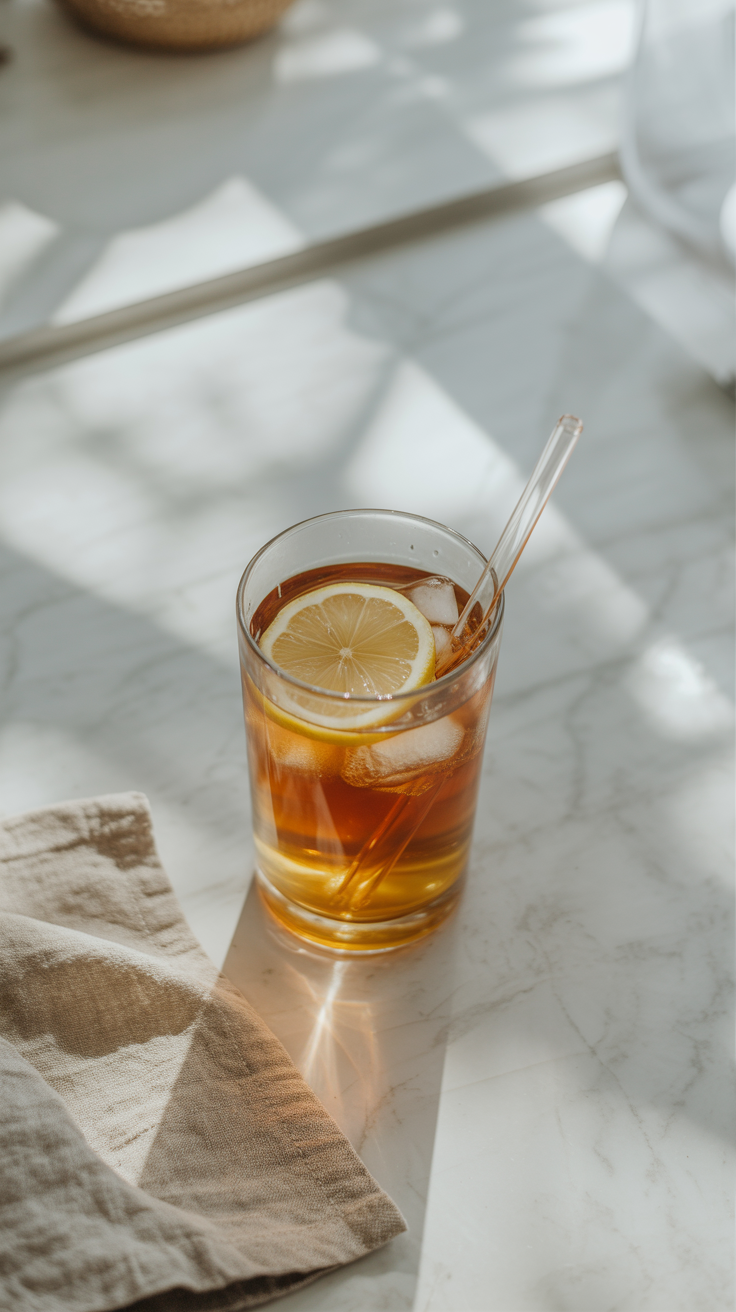
Brew a strong cup of lemon balm tea with a pinch of dried culinary lavender, let it cool, and serve over ice with a thick lemon slice; it’s basically a spa day in a glass.
Lemon balm is part of the mint family, and it is a powerhouse for “nervous exhaustion.” You know that feeling where you’ve worked so hard you can’t even figure out how to relax? That’s where lemon balm shines. It’s a nervine, meaning it specifically tonifies the nervous system. Lavender, of course, is the universal symbol of calm, but drinking it provides a much deeper effect than just smelling it.
I like to make a strong infusion of these two herbs and pour it over a mountain of ice with a squeeze of fresh lemon. It’s incredibly light and crisp. This is my “Sunday reset” drink. It pairs perfectly with a stack of books, a lit candle, and the complete absence of notifications on my phone. It’s a way to romanticize the act of simply being still. (Which sounds lovely until I realize I’ve been staring at the same page for twenty minutes because my brain is still trying to process a grocery list).
7. Coconut Water with Trace Mineral Drops
Pour 1 container of chilled coconut water over ice and add 5–10 drops of concentrated trace minerals; stir once and sip immediately whenever you feel that “brain fog” creeping in.
Sometimes, the “anxiety” we feel is actually just chronic dehydration and electrolyte imbalance. Coffee is a diuretic, which means it flushes out the very minerals our nerves need to conduct signals properly. Coconut water is nature’s IV fluid, packed with potassium. Adding trace mineral drops (which usually contain magnesium, chloride, and boron) creates a “smart water” that actually reaches your cells.
This is the “lazy smart” way to handle a frazzled brain. It requires zero brewing and zero whisking. If I’m having a day where even the thought of making a matcha feels like an insurmountable task, I grab a coconut water. It’s hydrating, it’s slightly sweet, and it immediately helps settle that “buzzing” feeling under the skin. It’s a low-effort glow-up for your internal chemistry.
The Coffee Transition: How to Make the Swap
We have to be honest with each other: if you go from four cups of coffee to zero overnight, you are going to feel like you’ve been hit by a very stylish but very heavy bus. The nervous system doesn’t like sudden, jarring changes. It likes gradual, rhythmic shifts.
| Beverage Type | Caffeine Content | Nervous System Impact | Best Time of Day |
| Iced Coffee | 150mg+ | High Cortisol Spike / Fight-or-Flight | Before 10:00 AM (If at all) |
| Iced Matcha | 35-70mg | Sustained Focus / L-Theanine Calm | 11:00 AM – 1:00 PM |
| Adrenal Tonic | 0mg | Mineral Support / Cortisol Balancing | 2:00 PM – 4:00 PM |
| Tart Cherry | 0mg | Melatonin Support / Anti-Inflammatory | 7:00 PM – 9:00 PM |
Instead of a total overhaul, try the “Bridge Method.” Keep your morning coffee if you must, but commit to making your second drink of the day one of these nervous-system-loving alternatives. Eventually, you’ll find that you don’t actually miss the jitters. You just missed the ritual.
Why Is Nervous System Regulation Important?
We live in a world that treats “hustle” like a virtue and “rest” like a weakness. But your nervous system doesn’t care about your productivity goals. It only cares about whether you feel safe. When we constantly bombard our bodies with caffeine, we are keeping ourselves in a state of survival. This leads to burnout, hormonal imbalances, and a general sense of being “disconnected” from our own lives.
Choosing a calming iced drink is a small, rebellious act of self-care. It’s saying that your peace of mind is more important than a temporary caffeine buzz. It’s about moving toward a “softer” way of living—one where we listen to our bodies instead of shouting over them with another espresso shot. Whether it’s the ritual of the rose tea or the mineral-rich coconut water, these choices accumulate. They teach your body that it can rely on you to provide actual nourishment instead of just more stimulation.
I think back to my time in London, walking through Highgate Cemetery in the rain (the peak of my gothic phase, clearly). Everything was slow. The ivy grew slowly over the stones; the air was heavy and still. There is a strength in that kind of stillness. We spend so much time trying to be “fast” and “efficient” that we forget how to be resilient. Resilience comes from a regulated nervous system, not a caffeinated one.
One Thing to Try
If you’re feeling overwhelmed by the options, just start with the Iced Tart Cherry Juice with Magnesium. It is, hands down, the lowest-effort shift with the highest immediate reward. You don’t need fancy equipment or a “perfect” routine.
Tomorrow afternoon, when that 3:00 PM slump hits and you feel that familiar urge to drive to the nearest coffee shop for a “pick-me-up” that you know will actually just “bring-you-down” later, try this instead. Pour the tart cherry juice over plenty of ice, stir in your magnesium, and take exactly four minutes to sit. No scrolling, no checking Barry’s location to see if he’s almost home, no planning dinner.
Just sit. Listen to the ice clink against the glass. Notice the tartness on your tongue. This isn’t just about a drink; it’s about proving to yourself that you can create a pocket of calm in the middle of a chaotic day. You aren’t broken, and you aren’t “lazy” for needing a slower pace. You’re just a human being with a very smart brain that occasionally needs a cold, red reminder that everything is actually, finally, okay.
Frequently Asked Questions About Iced Drinks That Calm Your Nervous System
Can Iced Coffee Cause A Nervous System Reset To Fail?
Yes, because the high dose of caffeine triggers a cortisol spike that essentially overrides any calming efforts. It’s like trying to meditate while someone is playing the drums in your kitchen. Stick to lower-caffeine or herbal alternatives to let your body actually find its baseline.
Why Do I Feel Anxious After Drinking Iced Drinks With Caffeine?
Caffeine mimics the physical symptoms of anxiety, like a racing heart and shallow breathing, which tricks your brain into thinking there is a threat. When it’s iced, you might gulp it faster, hitting your system all at once. Your brain basically thinks it’s an emergency (which… rude).
What Are The Best Iced Drinks That Calm Your Nervous System Quickly?
The Adrenal Creamsicle or iced tart cherry juice are the fastest ways to settle a frazzled system. These provide immediate minerals and glucose that tell your adrenal glands to stop pumping out stress hormones. It’s a very “lazy smart” way to find instant peace.
Is Matcha Better Than Coffee For Nervous System Regulation?
Matcha is significantly better because it contains L-theanine, an amino acid that smooths out the caffeine hit. You get the focus without the “glitchy” vibration of a standard iced latte. It’s the difference between a gentle sunrise and a strobe light hitting your face.
How To Stop Nervous System Burnout Without Giving Up Iced Rituals?
The key is to replace the stimulant with a mineral-rich alternative like coconut water or holy basil tea. You still get the sensory satisfaction of the ice and the straw, but you’re actually feeding your nerves instead of depleting them. Ritual preserved, sanity intact.
Can Anxiety Cause You To Crave More Caffeine?
Absolutely, because your brain is looking for a quick hit of dopamine to cope with the stress. Unfortunately, this creates a loop where the caffeine then fuels more anxiety. It’s a sneaky cycle that usually ends with me staring at a wall for twenty minutes.
Are There Any Iced Drinks That Calm Your Nervous System Before Bed?
Iced lemon balm or tart cherry juice are your best bets for evening regulation. These specific plants contain compounds that support GABA and melatonin production, helping your brain finally get the memo that the day is over. It’s like a soft weighted blanket for your thoughts.
What Causes The Shaky Feeling After Drinking Cold Brew?
Cold brew is often much more concentrated than regular coffee, leading to a massive caffeine load that overstimulates your motor neurons. That “vibration” is just your nervous system being pushed past its capacity. Switching to a hibiscus cold brew offers the same aesthetic with ZERO jitters.